
Fascinating Changes

Juncos migrate south to the Upper Midwest each fall.
“There’s a junco!” Rich exclaimed as he pointed toward the tiny bird on a mid-October Walk. We knew the changing of the guard had happened.
Sighting the first junco each fall is, for us, a sign of the changing of the guard. They arrive for the winter at about the same time house wrens depart Iowa for warmer locales down south.
Changes in both bird species are fascinating to watch. On the same walk that we spotted the junco we saw dozens of robins. Unlike wrens and juncos, robins aren’t ambitious migrants. Come spring they cavort on lawns and love suburbia, but when the weather cools, they pack up and move to nearby orchards and brushy places that offer dried berries to eat through the cold winter.
We like watching birds, but we’re not serious birders. Serious enthusiasts will drop whatever they’re doing and drive a couple of hundred miles to see an unusual bird. We’re content to sit on our back deck or walk local trails to watch changes in bird numbers and species. We love the changing of the bird guard.
Birds
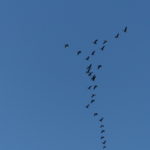
Geese flying
Big changes come in mid-autumn and late winter. Waterfowl are the most obvious “changing of the guard” as they wing overhead on their way back south, or north in the spring. Unnoticed by many people are the earlier migrants like the shorebirds that head south as early as August. Wrens hang around in late summer after fledging but are quieter. Nighthawks and chimney swifts stage to head south. Vultures soar overhead and drift to warmer climes when they need to. Often, we just don’t notice these changes in bird activity until we realize we have not seen a species for a while. Or when we see birds that have been “quiet” for a few weeks, begin to flock.
Spring Changes
In late March Robins on lawns, waterfowls calling from aloft, and Vultures circling overhead herald spring’s return. Figuring out when the last junco leaves is tougher as they simply seem to melt away. Often, we’ll ask each other, “Have you seen a junco lately?” If the answer is “no” they’ve likely left for northern breeding grounds. In April we anticipate the first wren’s arrival.
Busy Summer Months
April and May are fascinating months as the summer guard arrives. Some, like many warblers, stay just for brief stops to rest and eat. Then they head north. However, orioles, grosbeaks, phoebes, and a few warbler species, stick around all summer to delight us with their songs and color. It is sad when they slip away as summer transitions into fall.
-

- The jelly attracts the orioles.
Trees Change, Too!
Many people anticipate the change of tree color and travel to catch “the height” of fall foliage. In New England these “migrants” are called “leaf peepers.” The come, catch the color, spend money and go back home. Here is one road trip that is worth reading about. Marion is familiar with many of these places in her home territory.
Around here, we notice more color in towns and cities than the countryside as the tree species are more varied. Ashes turn purple or yellow, maples are known mostly for reds and oranges. Yellow Cottonwood leaves dance in autumn breezes before winds strip them off. The driftless area of Northeast Iowa, Southern Minnesota and Wisconsin, and northern Illinois are always worth a jaunt to for color and birding.
Glorious weather of warmer days and cooler nights feel good all around. Fall sports have cranked up. And, there is a longing in the air. When our avian friends slip away unnoticed, we feel slightly bereft. Time is moving on.
-

- Trees turn color.
-

- Brilliant trees.
-

- Firetower in background.
-

- lake and trees.
Steppping Into Winter Mode
So, the first junco sighting stirs pleasant memories. We find few winter activities are as delightful as sitting indoors embraced by our woodstove’s warmth while enjoying a cup of steaming tea while watching juncos along with, chickadees, nuthatches, woodpeckers, cardinals and bluejays that visit our feeder. The latter here all year and bring joy and color during the drab winter months.
