by Winding Pathways | Dec 2, 2021 | (Sub)Urban Homesteading, Foraging, Garden/Yard, Trees
On a windy cold Thanksgiving afternoon, we did something nutty. After tossing buckets and shovels into our pickup we drove north until we spotted greenish foliage popping through the road ditches dry grass.
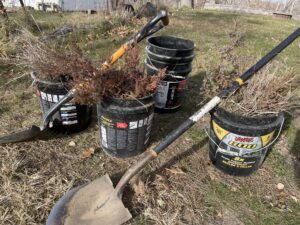
There, we rescued six red cedar trees that are now at home in our yard.
A Hardy Tree
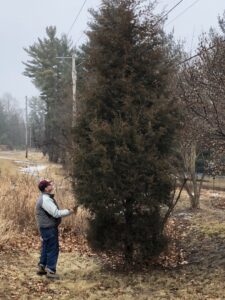 Few American trees have such a love-hate relationship with people as the red cedar, which is actually a Juniper. Perhaps it’s unpopular because of the plant’s amazing adaptability. Sure, it needs full sunlight but given that it thrives in heat, salty roadsides, and terrible soil it is one hardy plant! Even stiff grass competition that snuffs out other baby trees doesn’t seem to bother it.
Red cedars thrive from the Great Plains eastward to the Atlantic Ocean. In many places they are small bushes, but sometimes the tree grows big enough to interest loggers. The aromatic wood is used to craft cedar chests, closet linings, and even pencils. Fence posts made of it last for decades.
Why Ranchers and Farmers Dislike Cedars
Ranchers curse cedars because they spread in pastures. Cattle don’t like dining on prickly cedar twigs, and within a decade or two cedars replace the grassy food that cows love with a green desert of scrubby trees.
What’s to Love About Red Cedars
But, a cedar grove isn’t really a desert. Birds, especially cedar waxwings, love eating their tiny blue berries, and dense stands of cedars protect many species of wildlife from howling wind, searing sun, and predators.
There’s more. We live in Cedar Rapids, a city named for the rugged trees that grow in rocky bluffs over the Red Cedar River. They’re small and twisted but some are over 400 years old.
We planted our cedars on the edge of our property where they will form a screen from the wind and passing car headlights. They also will give us privacy, and be a safe home for birds that visit our feeders.
In mid-December, we’ll return to the road ditch and cut a six-foot red cedar for our Christmas tree. Cedars are scraggly and unsymmetrical, but we don’t put our tree up in the house. It will grace the Holiday season on our back deck. Pouring a few cups of sunflower seeds in its foliage creates a living stream of ornaments as goldfinches, chickadees, cardinals, and nuthatches come and go.
For information on red cedars and many other trees visit the website of the National Arbor Day Foundation.
-
-
We rescued seedlings to plant for screens in our yard.
-
-
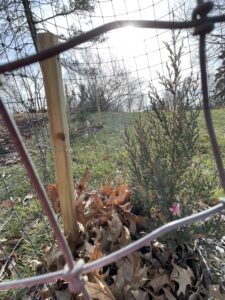
We remember to protect the seedlings.
by Winding Pathways | Jan 21, 2021 | 1080 Labyrinth Blog, Garden/Yard, Gazette Features, Nature, Travel/Columns
Actually, 2020 has been incredibly busy for Winding Pathways writing in 2020. This winter we invite you to grab a warm beverage, curl up, and take in some of our features in the Cedar Rapids Gazette.
December 20, 2020. Walking Cemeteries. https://www.thegazette.com/subject/sports/outdoors/a-peaceful-outdoor-walking-option-20201221
December 14, 2020 Iowa Meat Lockers: https://www.thegazette.com/subject/sports/outdoors/a-meaty-adventure-20201214
Nov 11, 2020 Iowa’s Inland Seas. https://www.thegazette.com/subject/sports/outdoors/enjoying-iowas-inland-seas-20201111
Sept 27, 2020: New Life to dead Trees. https://www.thegazette.com/subject/sports/outdoors/dead-trees-give-life-20200927
September 20, 2020: Walk Outside Safely. https://www.thegazette.com/subject/sports/outdoors/get-outside-and-walk-but-stay-safe-20200920
September 9, 2020: Rebirth Amid the Rubble https://www.thegazette.com/subject/sports/outdoors/a-rebirth-among-the-rubble-of-trees-20200906
August 22, 2020: Iowa’s National Parks. https://www.thegazette.com/subject/sports/outdoors/iowa-national-parks-guide-effigy-hoover-20200822
July 27, 2020: County Parks. https://www.thegazette.com/subject/sports/outdoors/take-advantage-of-iowas-county-gems-20200727
July 11, 2020: Tenting. https://www.thegazette.com/subject/sports/outdoors/why-rv-live-isnt-for-these-senior-tent-campers-20200711
June 26, 2020: Bear Sightings in Iowa: https://www.thegazette.com/subject/sports/outdoors/why-rv-live-isnt-for-these-senior-tent-campers-20200711
April 12, 2020” Walk on Wilder side. https://www.thegazette.com/subject/sports/recreation/take-a-walk-on-the-wilder-side-20200412
by Winding Pathways | Jan 2, 2016 | Nature, Reflections/Profiles, Wonderment

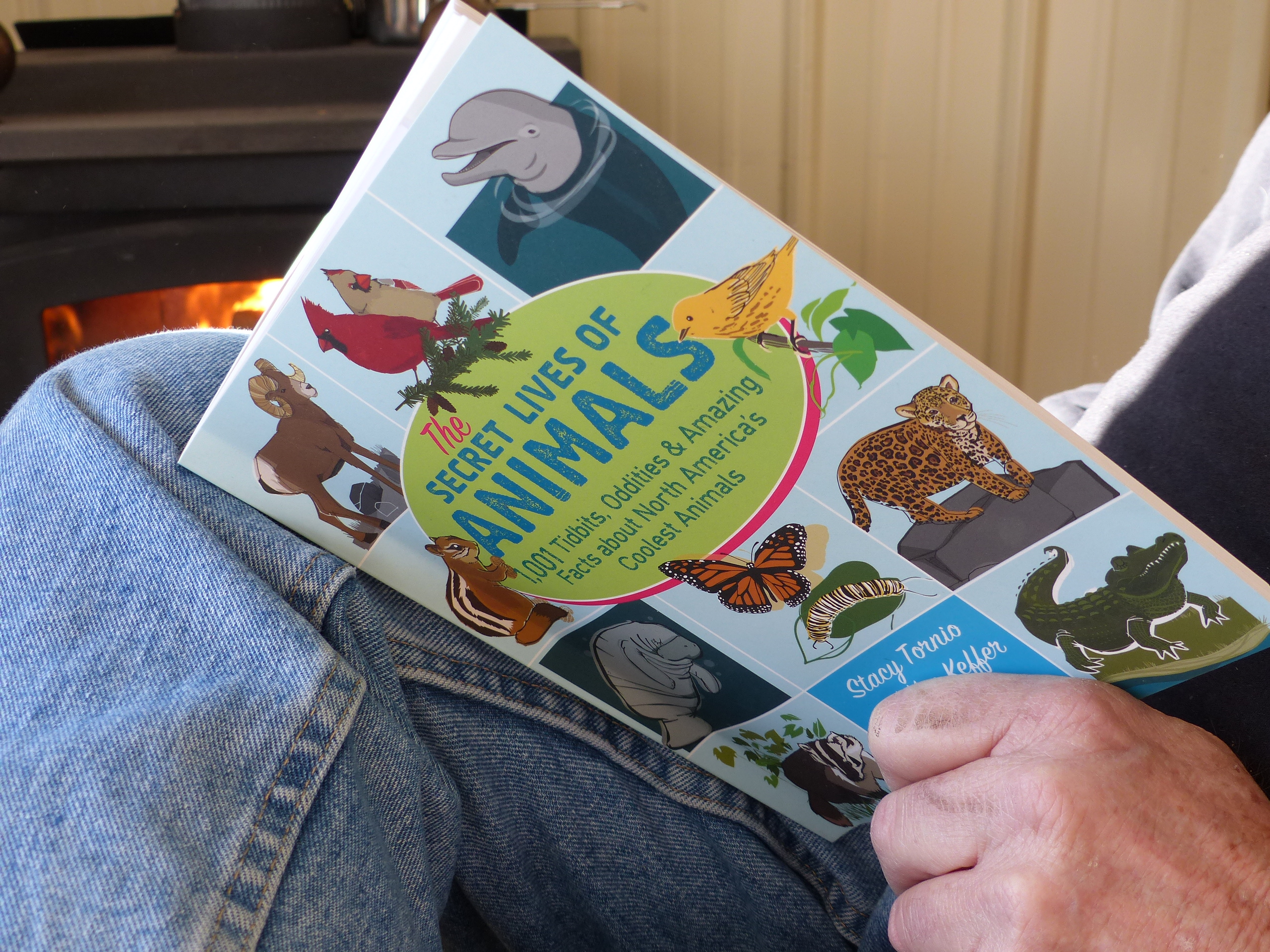
This great book is colorful, factual and encourages folks to “Go Outside!”
As kids growing up, we read books our classmates would have considered weird. They were field guides to birds, mammals, fish, wildflowers, rocks and the weather. Color plates of animals, trees and all sorts of other living things fascinated us. Range maps taught geography, and the text good writing.
With the rapid growth of apps to help identify many objects of nature, field guides may be slipping from winter reading lists, but there is one new book that any nature lover should have handy.
The Secret Lives of Animals includes 1001 tidbits, oddities and facts about North America’s wild animals. It’s not a book to read cover to cover. It is one to pick up when there are a few spare minutes for learning and enjoyment. There’s learning on every page. We see two audiences who will enjoy having this book close by.
Kids and adolescents: With colorful illustrations and loads of facts presented in succinct form it’s a fascinating book for youngsters. We would have loved to have had this book by our bedside when we were young to glean wildlife snippets in moments before sleep.
Adults: The book is studded with interesting facts and makes a good one minute or three hour read. Any trivia lover will enjoy it as well as people who delight in wildlife.
Our favorite part of the book appears frequently and is called GO OUTSIDE. Going outside and enjoying nature is what we advocate at Winding Pathways and The Secret Lives of Animals gives readers something new to look for outdoors and then encourages them to put the book down, pull on the boots and go explore outside.
THE SECRET LIVES OF ANIMALS-1001 Tidbits, Oddities, & Amazing Facts About America’s Coolest Animals, by Stacy Torino and Ken Keffer with illustrations by Rachel Riordan. FalconGuides. ISBN 978-1-4930-1191-9. http://amzn.to/1PMc5EJ