by Winding Pathways | Jan 18, 2018 | 1080 Labyrinth Blog, Labyrinths, Reflections/Profiles, Wonderment
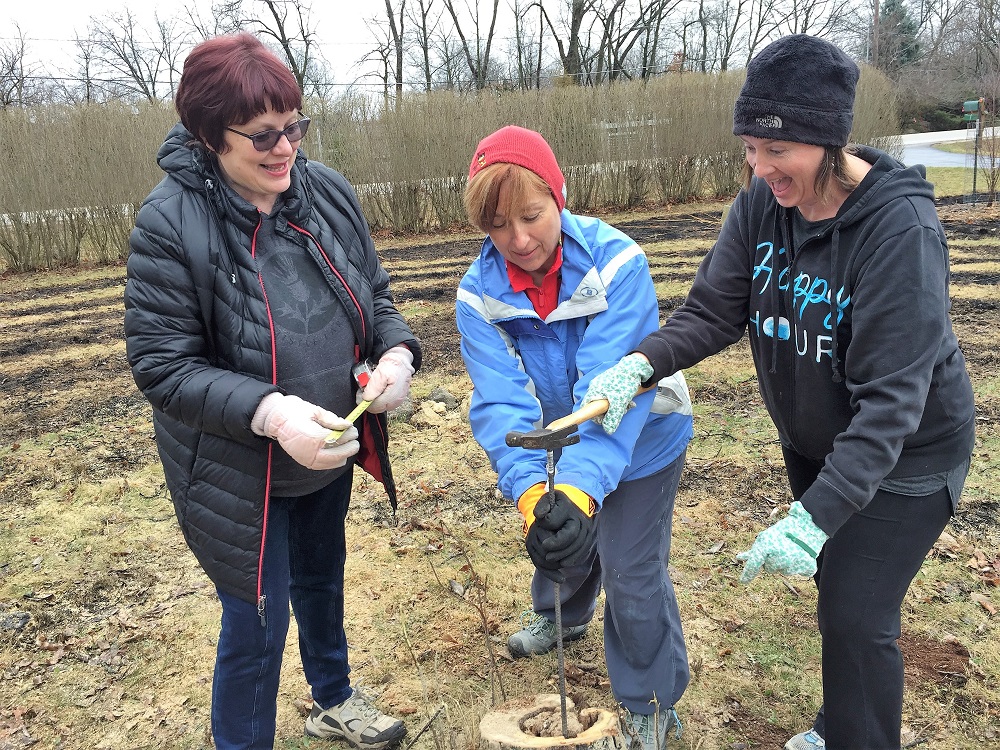
Nelda, Teri, and Wahneta constructing the Phoenix Harmony Labyrinth.
Midwest by West by Southwest, I walked several labyrinths and with the help of several stellar friends re-created the labyrinth in our front yard. With the help of wonderful friends, the five-circuit Phoenix Harmony Labyrinth replaced the seven-circuit Classical labyrinth. The magnolia that was dying came down and a small bur oak took its place. New circuits were measured and established. And, a lovely cross-quarter day dedication ceremony welcomed the Phoenix Harmony Labyrinth. All summer, fall and early winter pilgrims walked in groups and individually helping to settle in the labyrinth in our front yard.
We traveled north into Minnesota, East to New York, West to Washington State, and Southwest to Arizona enjoying labyrinths and solitude along with communing with friends and family.
The 1080 Labyrinth blog picture gallery documents the travels, the travails, and the joys.
by Winding Pathways | Jan 11, 2018 | Geology/Weather
Today it’s easy to buy just about anything by touching a few keystrokes. In an amazingly short time, a package from Amazon or another company will arrive. However, it wasn’t always easy to acquire important things. Consider obsidian.
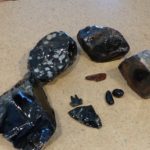
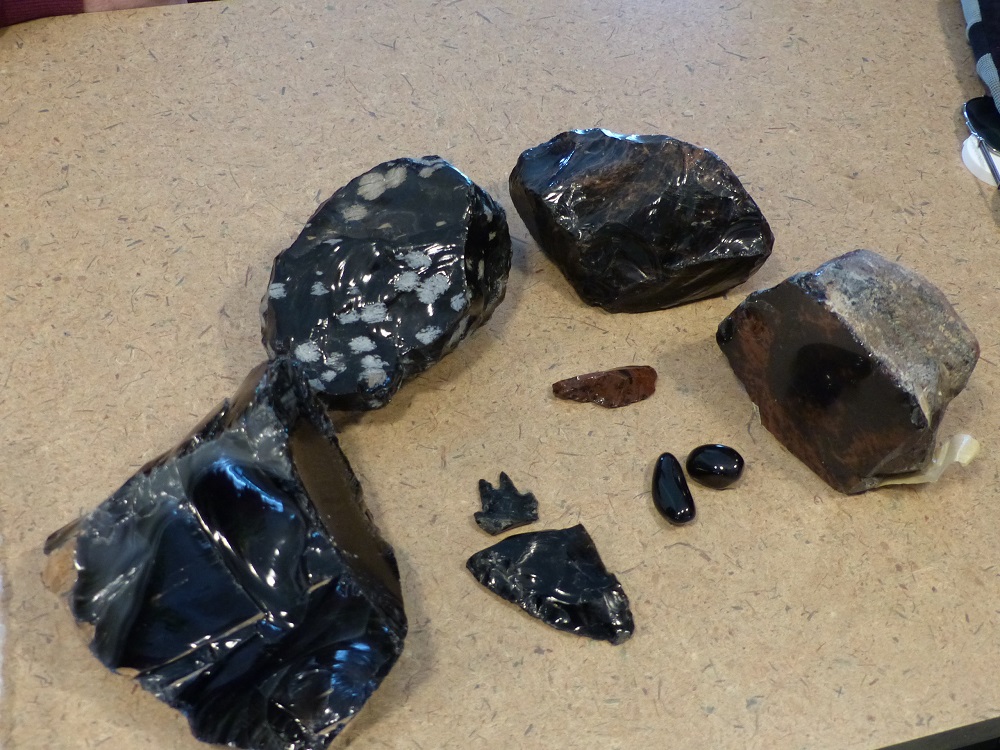
Snowflake, Conchoidal shape, Apache tears.
Obsidian is a fascinating rock always formed by volcanic action. It’s essentially natural glass, and a chunk of it shimmers in the hand. It’s usually black but can be brown, tan, green, blue, red, orange or yellow depending on the minerals within it.
Although obsidian is found in natural deposits scattered around the world, in the United States it occurs mostly in Arizona, California, Idaho, Nevada, and Oregon with smaller deposits in New Mexico, Washington, and Wyoming. An entire obsidian hillside is easy to see from the road in Yellowstone National Park just south of Mammoth.
In days long before Amazon shipped packages, obsidian was one of the most precious of commodities. Imagine you are Native American thousands of years ago. Some of this evening’s dinner may come from corn or squash you grew but more likely it would be deer, elk, rabbit or squirrel meat or even a big catfish fillet.
Back then hunting wasn’t recreation. It was a vital source of food, and hunters had to do whatever possible to make catching an animal successful. They spent hours crafting efficient spears long before the bow and arrow were invented. After bows replaced spears Native Americans crafted efficient arrows.
Obsidian was the very best rock to make spear and arrow points from. It fractures into flakes so sharp that it has been used for modern surgical scalpels. It makes beautiful and deadly spear and arrow points.
Most Native Americans had a problem. There was no natural obsidian within hundreds or thousands of miles of their homes. Often, they used flint or chert for points. These worked well, but Obsidian was better. It was a valuable commodity.
Long before history began recording events Native Americans had developed elaborate trade routes across North America. One of the most valuable trade items was obsidian. We live in Iowa, and there are no known natural obsidian deposits. But obsidian arrowheads are relatively common. There’s no doubt that it came here, and throughout most of North America, carried great distances by traders who walked around the continent and swapped it for items they needed.
Modern bowhunters use arrows tipped with razor-sharp steel points, but obsidian is still valued for its beauty and unusual shapes and colors. Today it’s zipped around the world in cars, planes, trucks, and ships. It’s even possible to order it from Amazon.
by Winding Pathways | Jan 4, 2018 | Labyrinths, Reflections/Profiles, Wonderment
Two articles from The Gazette have sat on my desk for months waiting. Like Advent. Waiting. And, now, with the Holiday Season wrapping up, Epiphany within, Bowls in full swing, and the New Year upon us, these two articles are more poignant than ever.
“Packing Away the Legos – and a Piece of My Son’s Childhood” by hospice worker, Kerry Egan, for the Washington Post; and “Building Blocks of Launching Good Memories”, by Lori Borgman with the Tribune News Services invite readers to reflect on changes in our lives. These rites of passage of growing up or “small deaths” of changes in our relations and the ultimate loss of life itself, and memories we create can help us as we positively navigate the twists and turns of life.
2017 was a year of saying “Goodbye” which also opened space and opportunity. Our bunny, Simon, had his last stretch out in the winter sun and then died peacefully in our arms. He is buried out back with the other bunnies. We still miss him, yet laugh when we think about how he would move back into the sun as it’s rays moved across the den floor. When we travel now, it’s only the needs of our chickens we consider.
Our daughter and son-in-law’s grand adventures of moving to Alaska for a job and an epic bicycle-fish ride along the West Coast put them geographically farther away, yet they share about intriguing places and Rich connects through his time in Alaska and his fishing stories.
Deconstructing the 1080 Laughing Labyrinth was hard yet joyful! As the prairie plants continued to encroach, maintaining and walking it were increasingly difficult and unrewarding. Finally, I just took it apart. For a long time I sat with, “Now what?” Then, from the ashes arose the Phoenix Harmony Labyrinth that friends helped create, dedicate and regularly walk. Opening space and opportunity.
Sometimes we just know when it’s time to formally say, “Goodbye”. A position. A relationship. We move along in life. Sometimes it’s sad. Other times a relief. To grieve is important and yet, we can choose to remember the positive memories that were the bond even as we open space to new possibilities.
Other “Goodbyes” come from literally clearing out space. Digitalizing pictures, respectfully releasing boxes of slides and photos, then making small photo albums. Deleting old computer files. Lo and behold, the hard drive has more space! Reading journals and old letters one last time, then taking them to the fire pit and letting memories float to the ethers. Tenderly touching favorite but no longer read books and giving them away for others to enjoy and love. Lesson plans and manuals from former teaching gigs represent so much time and effort and possibility. Now, they just take up space. So, it’s time to let them go. And the file drawers no longer bulge uncomfortably. Unworn clothes, unused kitchen items, old tools, multiples of anything, find new homes, the list goes on and on.
Suddenly the home is spacious, clean and lighter!
The last task of this year for me is packing away Christmas and browsing the cards people sent us. Building memories to last into the New Year and looking forward to the new. Wondering, where have we been all our lives.
by Winding Pathways | Dec 28, 2017 | Reflections/Profiles, Wonderment
“When the song of angels is stilled,
When the star in the sky is gone,
When the kings and princes are home,
When the shepherds are back with their flock,
The work of Christmas begins:
to find the lost,
to heal the broken,
to feed the hungry,
to release the prisoner,
to rebuild the nations,
to bring peace among the brothers (and sisters),
to make music in the heart.” Howard Thurman
by Winding Pathways | Dec 26, 2017 | Preparedness
Winding Pathways subscribes to the American Meteorological Society’s newsletters and updates. Here is a link to their latest suggestions to prepare and weather winter!
“5 Cold-Weather Hacks for Winter Driving.”