by Winding Pathways | Nov 16, 2017 | Travel/Columns
TRAVELING WITH BINOCULARS
Disclosure: Years ago we were asked to serve on the Alpen Optics Birding Pro-Staff and periodically we receive optics to test. Following is a report on using mini-binoculars while traveling.
In October we enjoyed a 1600-mile, 12-day clockwise loop around Washington State. After picking up our rental car at the Spokane airport our journey took us through deserts, mountain passes, the Olympic rainforest, and even across Puget Sound on a ferry.
We enjoyed spotting new bird species, sea lions, jellyfish, Roosevelt elk, and a host of other wildlife. Good thing we brought along binoculars! We wouldn’t dream of traveling without binoculars and use them constantly. Even when we trek to New York City we tote along a pair. But, for this trip, they presented a dilemma.
We wanted to avoid checking baggage on the plane to save cost and the possibility of a lost suitcase.

Rich with compact binoculars.
Delta Airlines limited us to a small suitcase that we could carry on the plane. Squeezing nearly two weeks’ worth of clothes and supplies into these packs was a challenge. It became obvious that we couldn’t fit in our full-size binocs. Mini Binoculars to the rescue! Our Alpen Wings ED compact binoculars easily nested into a hiking boot that we tucked in the pack.
For all around general binocular use, and when we’re traveling by car, we always use full-size binoculars. They fit our hands well, provide a bright image, even at dawn and dusk, and their field of view is wide. Their downside is bulkiness.
Many optical companies sell high-quality compact binoculars. Go for quality. Inexpensive models are nearly useless. Here are the pros and cons of mini binoculars:
PRO
Compact binoculars are handy because they are small. They easily fit in a glove compartment, purse, or jacket pocket and take little space in a suitcase. Mini’s are ideal for travel. Quality ones have clear optics.
Having a pair of mini binoculars handy is always better than not having binoculars.
CON
Mini binoculars have a limited field of view and are rarely as good in low light situations as their full-size cousins. We find them a little harder to use and hold than full-size models and would never choose to use minis for long viewing sessions or if we went on specific birding excursions. But they are invaluable when size and weight are limited.
The best solution is to have two pairs of binoculars. One full sized model for general use and minis for travel and convenience.
by Winding Pathways | Nov 9, 2017 | Nature, Trees/Shrubs
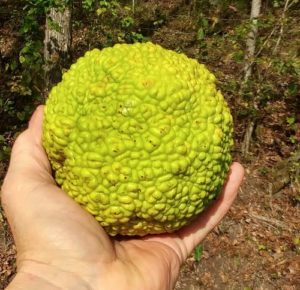 This fall we’ve noticed Osage Orange fruits for sale in grocery stores and roadside stands. They are fascinating and have a delightful fresh citrus scent.
These are often called Hedge Apples, and many people call the tree they grow on Hedge. More properly the tree is called an Osage Orange and the fruits are Osage Oranges. To add confusion some people, call the tree Bodark because its springy tough wood was once used to make bows.
The Osage Orange once lived in a relatively small area of Texas and Oklahoma but because it is tough, drought resistant, and thorny it was commonly planted in places outside its native range. The tree’s branches twist in many directions with thorn-studded twigs. When planted in a row, the trees created a living fence that cattle wouldn’t cross. In the days before barbed wire was invented millions of Osage Oranges were planted for fences.
The wood is hard and heavy and is outstanding for firewood, but cutting it is challenging because of all the thorns.
Does a Hedge Apple in the basement keep insects away? Many people think so and annually buy or collect a few. We think it’s an ineffective way to keep out insects and find caulking entry points better for excluding bugs from our home.
In recent years an oil extracted from hedge apples has been used in shampoo and hair conditioners, and many people love the product. It is marketed as POMIFERA in honor of the tree’s Latin name Maclura pomifera. Todd Johnson, a native Bloomfield, Iowan, has cashed in on the Hedge Apple industry.
Hungry squirrels sometimes eat the seeds hidden inside hedge apples and livestock sometimes dine on them but they are inedible to humans.
There’s no harm in putting a few hedge apples in the basement but don’t count on them to keep away bugs.
by Winding Pathways | Nov 2, 2017 | Chickens, Mammals, Nature
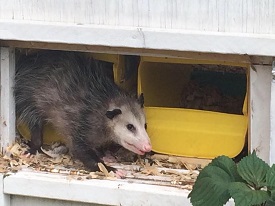
Below is a guest blog by Arianne Waseen about a visit by an opossum. Thanks, Arianne!
“Possum come aknockin’ at the door.”
“I went out in the afternoon a few weeks ago to look for eggs. I opened up the large door on the front of our coop, and in the nest box was something grey and furry and curled up in a little ball. My first thought was that it was a cat, but looking more closely it was definitely possum fur. I yelled and jumped a bit, and ran in to tell my husband and mother-in-law to come take a look. By the time we got back the possum had woken up. We opened up a little door we have at the back of the nest box and my mother in law encouraged the possum to jump down by prodding it with a broom from the front of the nest box. It jumped down and ran off. The opossum has come back a few times, and while it has not harmed our chickens, we are getting fewer eggs than we should be, and the possum has suspiciously glossy fur.”
by Winding Pathways | Oct 26, 2017 | Birds, Nature
This fall thousands of hunters will bring millions of ringneck pheasants home to be converted into delicious meals. Pheasants have been around so long that many people think of them as native birds. They’re not but they provide a lesson on how to structure a modern yard to attract wildlife.
In the 1880s Judge Owen Denny was stationed as a government agent in China. He and his wife took a fancy to colorful and tasty pheasants, which are native to Asia. They had some captured and shipped to Portland, Oregon where Denny’s brother released them on the family farm. They reproduced like crazy, and just ten years later Oregon opened the nation’s first pheasant season. About 50,000 were shot.
Pheasants began spreading out on their own and people speeded the process by capturing many and releasing them all over the country. The birds never took hold in the hot humid south but thrived in northern farmland that was a patchwork of grain and hayfields separated by brushy fence rows. By the mid-1900s they were abundant in the Midwest and eastward to the Atlantic wherever farms provided the right habitat.
Pheasants live near human activity. They love farmland yet shun forests. The bird did well until enormous changes in agriculture took place in recent years.
Because of rises in grain prices, huge increases in the size of agriculture machinery and fields, and modern pesticides farmers began tearing out the brushy fencerows the birds loved. As corn and soybean prices shot upward hayfields began to disappear. Pheasants lost safe places to nest.
Because of habitat loss pheasant populations are smaller than they once were but when habitat improves pheasant numbers swiftly rebound. It’s a good lesson for homeowners.
Pheasants generally aren’t backyard birds because most people live in shady suburban neighborhoods or big cities. Homeowners with yards backing up to farm fields might enjoy pheasant visits but otherwise, the birds are denizens of agricultural land.
However, pheasants provide a graphic example of the importance of habitat that applies to all species, including the loved and valued wildlife that lives in suburbia – or might if they find good living conditions. Chickadees, woodpeckers, goldfinches, cottontails, barred owls and dozens of other fascinating animals enjoy sharing yards with humans. If backyard habitat is improved they will come.
Here are a few ways to structure a yard, even a tiny one, to attract a variety of interesting wildlife:
- Create Diversity. Plant trees, shrubs, grasses and flowers that offer wildlife food and shelter. The greater the diversity of plants the greater the number of species that will take up residence.
- Shun Pesticides.
- Provide water. A tiny backyard pool or even birdbath will be appreciated by wildlife
Adding food might or might not help wildlife. It depends on what expert you consult, but adding a feeder certainly encourages wild animals, especially birds, to come close to the window so they can be seen. One of the very best seeds to put in the yard is black oil sunflower, which many species enjoy. The worst is milo, which is shunned by native species but devoured by House Sparrows. Corn is inexpensive and enjoyed by many wild animals.
An exciting and rewarding project is converting a sterile mowed and sprayed lawn into a wildlife haven. Pheasants probably won’t come but dozens of beautiful and interesting animals will.
by Winding Pathways | Oct 19, 2017 | Bugs, Nature
At Winding Pathways, we take joy in fall’s colorful leaves, cool days, and clear air, but we know insects are on the move.
Box Elder Bugs, Asian Beetles, other insects and spiders, and mice all sense that frigid air is on the way and seek shelter from the cold. Houses offer secure nooks and crannies to hide in and central heat to keep them toasty warm. Houses also imitate natural wintering places. Asian beetles, for example, naturally winter in the cracks of rock outcroppings. So, a house makes a perfect substitute.
Filling a Crack
Homeowners have options for reducing winter insect infestations. Many turn to insecticides when they spot beetles or bugs clustering on interior windows and walls. We avoid poison and opt for nontoxic solutions.
At Winding Pathways, we simply make it hard for bugs and mice to enter. We can’t keep all of them out but we greatly reduce their numbers. Here’s what we do before the first frost:
- Load a tube of exterior caulk into our caulking gun and inspect our house’s exterior. We squirt caulk into every crack and hole in the siding. Likely bug entry points are where wires, cables, and pipes enter the house and around door and window frames. Often old caulk has split or fallen out, so we replace it. We also inspect thresholds to make sure there is no space beneath doors for bugs to enter. Sometimes we need to replace weather stripping around doors and windows.
- Keep most firewood outside. We used to bring several days’ worth of firewood inside to make feeding our woodstove convenient but insects, like mosquitoes, hitchhiked on the cordwood and then roamed around the house. We now keep the wood in the cold just outside the door and only bring in a few pieces at a time when we need to feed the fire.
- There’s an added benefit to excluding insects and mice. The holes and cracks they use to squeeze into the house also invite in winter’s cold air. Sealing them up keeps the house warm and lets us use less fuel in our furnace and wood stove.
- Cleanse houseplants. We move some houseplants outside for the summer and bring them back indoors before the first frost, but insects can ride the plants into our home. To prevent this, we carefully clean and repot plants. Master Gardener, Tina Patterson, had an excellent column in The Gazette, Living Section, Sunday, October 1, 2017, that describes in detail ways to safely clean your plants and keep them healthy inside all winter. We have reprinted this with permission of the Gazette, Linn County Master Gardeners Program, and Tina Patterson.
FROM THE GROUND UP | LINN COUNTY MASTER GARDENER
Don’t bring in bugs with those summer plants, By Tina Patterson, Iowa State University Extension
Time to bring in those houseplants that have been soaking up the sun outside all summer. As temperatures drop, it is a good idea to make sure they make the trip alone. Bugs and spiders and even tree frogs have made their way into my house before I learned a couple of little tricks to keep them at bay. Trevor the tree frog hid in the soil of a lemon tree only to pop out one warm winter afternoon. Before you bring pots into your home, prep them for the trip. A large bucket of water with a mild soap without degreaser or detergent should do it. Trim off damaged leaves while inspecting for insect eggs on the undersides. Submerge the pot into the bucket and let it sit for 10 to 15 minutes. This should be long enough for any bugs lurking under the soil line to leave.
After removing, let it drain. Scrub the outside and bottom of the pot with a stiff brush to remove dirt and possible bugs. Rinse foliage that did not getsubmerged with a slow hose. Don’t be concerned about soil floating out of the pot. Just top it off with fresh soil once it has drained. Skim any leaves or soil that floats free. You can soak four to five pots in the same water before refreshing.
If you suspect insects deep in the soil or the plants are in need of a fresh pot, it might be a good idea to remove them from their pots, rinse the soil off the root system, let them soak for 10 to 15 minutes and repot in a fresh pot with fresh soil. Boston ferns are good candidates for this because their roots can benefit from a good long soak before coming indoors for the cold months.
Another method for dealing with potential insects is to give them a one-two punch by adding a systemic insecticide that may keep pests where they belong. Added to the soil and watered in, systemic pesticides are water soluble and are absorbed by the tissues of the plant to reach the leaves, flowers, fruit and roots. One fairly simple remedy is one part 3 percent hydrogen peroxide mixed with four parts water, which will drastically reduce gnats in your pots.
Physical traps can help to cut the insect population down to size. Yellow sticky traps or insect tapes are good for fungus gnats that live in the first inch of soil. Keep air moving on well-lit plant shelves. It will help keep mealy bugs and aphids away.
With a little prep work, your plants will be healthy and happy through the winter months – and relatively bug free.
For questions, call the Linn County Extension Master Gardener Hortline at (319) 447-0647.