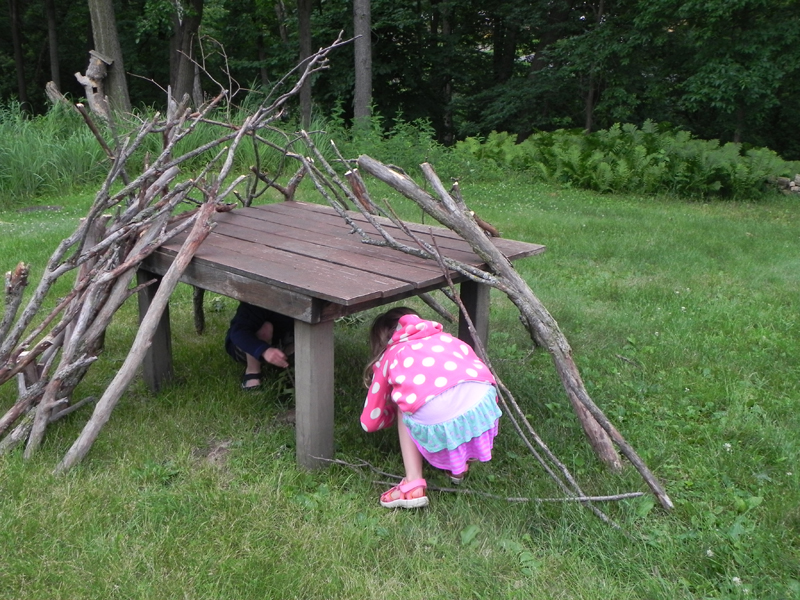
Kid Camping
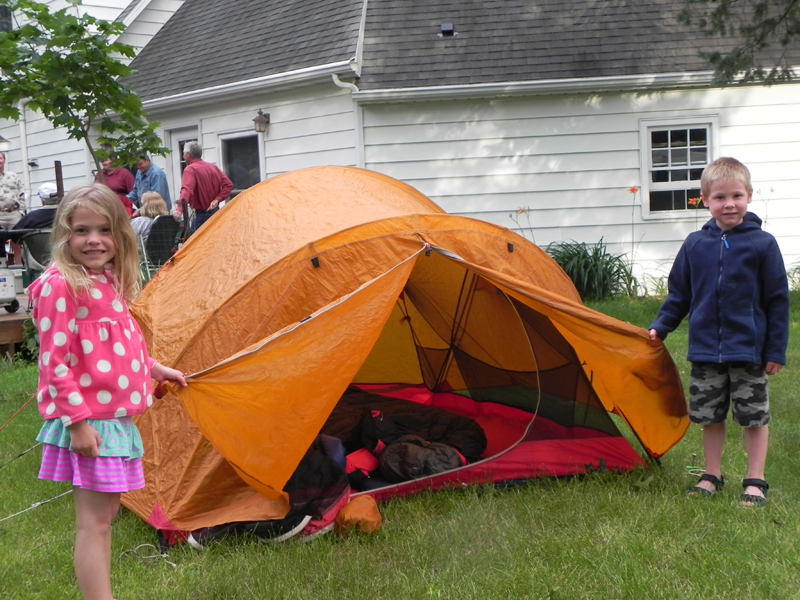
Our son and daughter loved kid camping in the back yard. Warm month Holidays and each summer, usually a week or so before school started, they’d invite a few friends for an overnight adventure.
Today’s well insulated and screened homes keep out frigid temperatures and summer insects. Unfortunately insulation also masks nature’s wondrous late summer sounds.
Children take to camping out. Even a tiny backyard can easily be converted into a temporary campground. Equipment is simple. August weather is warm enough that a sheet and blanket eliminate the need for a sleeping bag. All that’s needed is a simple inexpensive tent, blankets, flashlights, a pillow and some parental guidance.
We won’t forget the night our daughter, then about eight, and her friends came running back into the house after “WHOO WHOO COOKS FOR YOU!” loudly entered their tent from a nearby elm. We went out with a flashlight seeking the elusive, but common, barred owl.
After catching a fleeting glimpse of the bird flying off the girls settled down in the tent to giggle, chat, and maybe even get a little sleep that night.
Here’s what you need to help your child and friends enjoy a night of kid camping right out the back door.
A simple inexpensive tent with a sewed in floor and mosquito netting. Being in a tent gives a feeling of security while keeping out bugs
- Flashlight
- Insect repellent
- Blanket and sheet to ward off evening chilly weather. An inexpensive sleeping bag is better
- Pillow
- Snacks and bottle of drinking water.
- Teddy bear and anything else that gives comfort to a sleeping child
The kids may want to bring a cell phone and games into the tent, although these might distract from listening to the sounds of the yard.
Parents can help make kid camping more entertaining and fun by guiding the kids in simple activities that might include:
FIRE: Gather dry sticks in the yard and neighborhood. Dig a small hole in the yard and build the fire in it. Show the kids how to build a tiny fire. Instruct them in fire safety. Grill hot dogs and marshmallows on sticks gathered from the yard. Enjoy story telling.
STARS: Unfortunately, light pollution and smog limit astronomy in most cities, but the major stars can usually be seen. Help the children find the Big Dipper and North Star. A free phone app helps initially until children are used to searching the night sky.
WALK IN THE DARK: Take a short walk in the dark yard and encourage kids to be comfortable without the pervasive lights of today’s society. Sit for several minutes in the dark yard to let your eyes adjust to night vision. Enjoy the sounds and feel of the evening. You may be surprised how your senses clue you in to the wonders of the night.
ENJOY SOUNDS: August is cricket and cicada month. But lots of creatures call from even the smallest and most urban yard. If lucky owls will call.
Follow up the night’s adventure with breakfast and conversation on what the kids heard and saw on their night outside.