by Winding Pathways | Jan 5, 2022 | (Sub)Urban Homesteading, Flowers/Grasses, Garden/Yard, Garden/Yard, Nature
A raging blizzard roaring over Winding Pathways just before Christmas 2022 showed us the power of HARVESTING SNOW. We love catching it. Other parts of the country endure blizzards, especially Nor’ Easters
Well, we didn’t really catch the snow, but our prairie did. It has a talent for harvesting snow and other forms of moisture. It taught us how prairie and other taller plants – grasses, forbs, shrubs, vines, and trees – help themselves grow next summer.
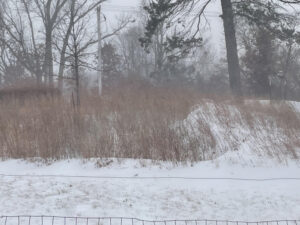
Our prairie has a thick growth of two-foot-tall dead stems from last summer’s growth. Each stalk is brittle, but thousands of them working together slowed the wind just enough for it to drop the snow it had swept off nearby lawns and roads.
The deep drift that settled on our prairie will melt and give next spring’s plants a jumpstart in moist soil. Nearby shortly sheared lawns can’t catch snow and will start the spring on dryer soil. Nature delivered irrigation water to our yard for free!
Sharing Nature’s Wisdom
In dry regions of the country, snow also helps next summer’s vegetables. During college, Rich worked weekends at an Idaho ranch. He was surprised one January when Lucille Pratt, part owner of the land and an outstanding vegetable gardener, asked him to shovel a snow drift from nearby onto the garden.
For a Jersey boy, this seemed like a weird request. He did as asked and learned that melting snow oozed water into the soil. That helped get the vegetables going come spring and sustained them through the dry north Idaho summers.
Snow may be a bother to some, but it’s also a blessing to dry soil and the plants it sustains.
Over two blizzardy days, our prairie gently caught snowflake after snowflake. We already are looking forward to bright prairie flowers dancing in next summer’s breeze. Thanks, prairie for harvesting snow. Nature’s wisdom to catch winter’s snow and help next summer’s growth is amazing.
-
-
Capturing snow.
-

-
Three days later, a rapid melt left the ground bare, except where prairie plants held snow.
by Winding Pathways | Dec 30, 2021 | Labyrinths, Reflections/Profiles
Chronologically I trace the year in different labyrinths.
-

-
January – First Day Gnome
-

-
January – Smudging for the new year.
-

-
March – A lovely labyrinth tucked into a corner of the seminary
-

-
March – This unusual labyrinth incorporated a tree in the middle.
-

-
March – Maintenance is always important with labyrinths.
-

-
April in Anchorage – Sometimes walking the path is enough.
-

-
Looking back.
-

-
The weekly finger labyrinth walks sponsored by Veriditas attract people from six continents.
-

-
Spring – Short Diversions Lead Back To Path
-

-
May – this beautiful labyrinth is a popular stop for visitors to New Bo.
-

-
May – Several people joined to take in the emerging plants.
-

-
June Solstice – On a brilliant first summer day people gathered to walk.
-

-
July – Part of the Johnson County, Iowa, conservation commission, this labyirnth invites contemplation.
-

-
August – With a guide our friend enjoyed the labyrinth.
-

-
Summer – Children joyfully romp on the path.
-

-
Summer – The Harris family are regular visitors to the labyrinth and bring friends along.
-

-
Summer – In all weather the labyrinth is intriguing.
-

-
August – Joy is a part of labyrinths.
-

-
Fall – A child explores the labyrinth.
-

-
September – A favorite labyrinth to visit.
-

-
September – Edith Starr Chases creativity inspires children to walk a labyirnth.
-

-
October – I walked in the fall without snow.
-

-
October – We explored ways to interact with the labyrinth.
-

-
November – The labyrinth is playful.
-

-
November – Each autumn we burn the Phoenix Harmony Labyrinth.
-

-
November – P. Admires his work as the solar lights glow softly.
-
-
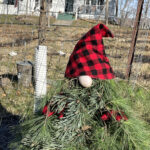
December – As the seasons turn, it is time for the seasonal evergreen gnome.
by Winding Pathways | Dec 23, 2021 | (Sub)Urban Homesteading, Energy Efficiency, Uncategorized
We knew natural gas prices were way up but our $80+ November bill both surprised and pleased us.
Surprise: That’s a high bill for us.
Pleased: Our efforts at energy efficiency and wise house management kept the bill from being higher.
Nearly everyone can reduce heating costs. Some actions are long-term, like adding insulation, replacing drafty windows, or installing a wood stove. There’s not enough time this year to put these in place this winter.
Here are short term ways to reduce the heating bill at either no, or low, cost:
- Open south-facing window blinds on sunny days. The sun will warm the room and never send a bill. Close the blind when the sun calls it quits and sets for the day.
- Caulk holes and cracks. We bought a spool of “rope caulk”. It’s putty that won’t harden, comes in a roll, and is easy to press into cracks, especially around windows.
- Replace the furnace filter. If it gets clogged with dust the furnace has to work harder, and that costs money. Write on the filter the date you replace it so you know. Then, make a note on your planner to check and replace. Some furnaces also send alerts to change a filter.
- Wear comfy sweaters and socks and set the thermostat down a few degrees. We often nestle under a blanket or throw when watching tv or reading in the evening.
It’s going to be an expensive heating winter, but taking a few simple efficiency steps will remove some of the monthly bill’s sting.
by Winding Pathways | Dec 9, 2021 | Garden/Yard, Nature
Meeting a Challenge
A few years ago, we received an email from the National Wildlife Federation asking us, and millions of others, to camp in the backyard once during the summer.
Upping the Ante

November makes 12.
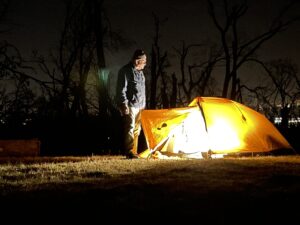
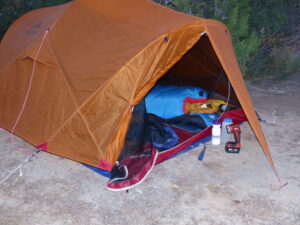
We took it to heart and then went further. Over the past twelve months, Rich and occasionally Marion camped out at least once a month. The first time was on an unusually mild December night in 2020. The last one as November 2021 ended. In brilliant sunshine, Rich set up his backpack tent about 20 feet from the garage and spent a night punctuated by coyotes and owls vocalizing in nearby woods. The night completed his camping every month for the past year.
Some months – like in the dark of winter – Rich tented in the back yard. After an evening of reading or watching a Great Courses DVD Rich bid “Good night” and stepped into the cool evenings, snuggled into the thick sleeping bag – preheated with “Hot Hands” packs, and enjoyed the evening serenades.
Watching the Weather
January and February 2021, Rich camped back to back. The predictions were mild for January 31st and February 1st. And, cold was on its way. So, Rich pushed away snow and set up his tent next to the barn where the chickens sleep. He was aroused at 4:00 a.m. when the light we use to wake the birds did just that. Between the bright light shining in his tent and the rooster’s crowing Rich gave up and came in about 4:30 a.m. Still, the overnight counts!
Combining Interests
In warmer months when fishing beckoned, he would head to NE or SE Iowa and come back with a string of trout or panfish.
The few times we traveled further afield, we tented – March in Kansas with the campground to ourselves; September and October in the East under beautiful stars and in the pouring rain.
Why Backyard Camp?
Backyard camping is great fun, even in a tiny urban yard. It also has these advantages over trekking to a distant state or national park:
- Spontaneous decision. No need to take time off work or school. Just set up the tent behind the house, add a sleeping pad and bag, and camp.
- Choosing the weather. If it’s cold, hot, windy, rainy, or (gasp) snowy, wait for a more pleasant night.
- No camping fee or need to drive anywhere.
- Easy to drag in many blankets and pillows that might not be taken on a camping trip somewhere.
- During winter’s long dark nights just stay inside to watch tv or read before sleeping in the tent.
- It’s an adventure….at least for kids.
-
-
First of 12 tentings.
-
-
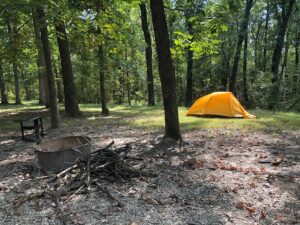
Summer camping is easy.
-
-
Sometimes we use cots for more comfort.
-

-
A Campfire adds a cozy feel.
With 12 months down, will Rich’s streak of every month camping continue????? We’re not sure, but likely it will.
by Winding Pathways | Dec 2, 2021 | (Sub)Urban Homesteading, Foraging, Garden/Yard, Trees
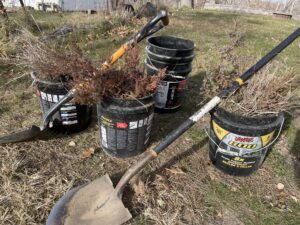
On a windy cold Thanksgiving afternoon, we did something nutty. After tossing buckets and shovels into our pickup we drove north until we spotted greenish foliage popping through the road ditches dry grass.
There, we rescued six red cedar trees that are now at home in our yard.
A Hardy Tree
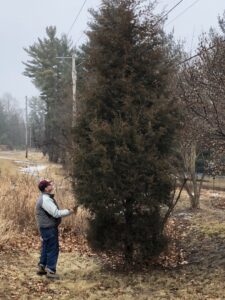 Few American trees have such a love-hate relationship with people as the red cedar, which is actually a Juniper. Perhaps it’s unpopular because of the plant’s amazing adaptability. Sure, it needs full sunlight but given that it thrives in heat, salty roadsides, and terrible soil it is one hardy plant! Even stiff grass competition that snuffs out other baby trees doesn’t seem to bother it.
Red cedars thrive from the Great Plains eastward to the Atlantic Ocean. In many places they are small bushes, but sometimes the tree grows big enough to interest loggers. The aromatic wood is used to craft cedar chests, closet linings, and even pencils. Fence posts made of it last for decades.
Why Ranchers and Farmers Dislike Cedars
Ranchers curse cedars because they spread in pastures. Cattle don’t like dining on prickly cedar twigs, and within a decade or two cedars replace the grassy food that cows love with a green desert of scrubby trees.
What’s to Love About Red Cedars
But, a cedar grove isn’t really a desert. Birds, especially cedar waxwings, love eating their tiny blue berries, and dense stands of cedars protect many species of wildlife from howling wind, searing sun, and predators.
There’s more. We live in Cedar Rapids, a city named for the rugged trees that grow in rocky bluffs over the Red Cedar River. They’re small and twisted but some are over 400 years old.
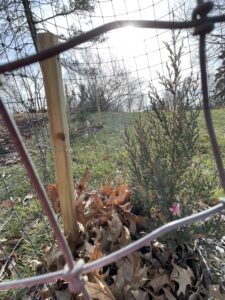
We planted our cedars on the edge of our property where they will form a screen from the wind and passing car headlights. They also will give us privacy, and be a safe home for birds that visit our feeders.
In mid-December, we’ll return to the road ditch and cut a six-foot red cedar for our Christmas tree. Cedars are scraggly and unsymmetrical, but we don’t put our tree up in the house. It will grace the Holiday season on our back deck. Pouring a few cups of sunflower seeds in its foliage creates a living stream of ornaments as goldfinches, chickadees, cardinals, and nuthatches come and go.
For information on red cedars and many other trees visit the website of the National Arbor Day Foundation.
-
-
We rescued seedlings to plant for screens in our yard.
-
-
We remember to protect the seedlings.