by Winding Pathways | Feb 16, 2015 | Reflections/Profiles, Wonderment
This blog is selected portions of a service on Love. It was designed to help Peoples Church Unitarian Universalist move through a trying time and prepare for change in a positive manner by addressing the five tough tasks each congregation faces in transition. Kathleen took the front and back portions of the service. Marion composed and spoke the body of the sermon.
“Welcome to Peoples Church; we’re glad you’re part of the service today. I’m Kathleen Watson; Marion Patterson and I will be leading the service today.
“We apparently all survived one of the most clever bits of marketing propaganda ever to be fed to the American people: Valentine’s Day. While florists, chocolatiers, and greeting card companies focus on the joys of romantic love, any of us who have been around for more than a couple of years know that real love is a lot more than hearts and flowers – it’s more challenging, it’s more work, and it’s more rewarding. Today, we’ll talk about different types of love and how they can appropriately be both self-serving and other-serving.
“Part of our work as a congregation during this time of transition involves vision work – imagining how we want our church community to be. So sit back and enjoy as the Choir sings Imagine, by John Lennon; join in if the spirit so moves you.
“Love is the spirit of this church,
[CUE] And service is its law.
“This is our great covenant:
[CUE]: To dwell together in peace, to seek the truth in love, and to help one another.
“So may it be.
“Marion, will you light our chalice, please?
“Our words for the chalice lighting are written by Maureen Killoran: “In these hard times, let us look first to the response of love. In the midst of challenge, may our chalice flame bear witness to the inherent worth and dignity of every human being. In the midst of uncertainty, may our chalice be a beacon of encouragement, that our values may guide our choices. Let us look first to the response of love.” The words of Maureen Killoran. Please be seated.
“STORY: No, We Won’t.
“In keeping with my lifelong role as a late bloomer, I just recently saw the Harry Potter movies for the first time. (For anyone who hasn’t yet seen them, I’m issuing an official spoiler alert.)
“In the very last movie, Harry has chosen to die, because that’s what’s required to defeat the ultimate bad guy; he basically lets the evil Lord Voldemort kill him.
“Voldemort has Harry’s body brought back to Hogwarts School of Magic, and he “invites” the students and staff to become his followers. Well, actually he says, “Come forward and join us, or die.” You can tell that everybody is scared, because this is one of the most powerful wizards who ever lived. But none of the good guys move. They say, by their actions, “No, we do NOT accept you.” But then they’re appalled when one of their classmates steps forward.
“Neville Longbottom is one of the secondary characters who’s been pretty much a klutz through the first seven films, but in this one he really steps into his own power. He breaks ranks with his classmates, but to challenge Voldemort, not to follow him.
“Neville says, “Doesn’t matter that Harry’s gone. People die every day…friends, family. We lost Harry tonight; but he’s still with us – in here. He didn’t die in vain. But you, Voldemort, you will, because you’re wrong. Harry’s heart did beat for us – for all of us. It’s not over!”
“Actions speak louder than words. I figured the message, “Pay up or die” was a bit harsh, but I do invite you to act with love and generosity as we take up our weekly collection.
ORISON
“Dona nobis pacem; grant us peace.
“One of the most loving things we can do for another is to surround them with support and encouragement when they’re in the midst of challenging times. I invite you to call out the name of anyone who could use the well wishes of our church family. [WAIT!]
“As we embrace the Spirit of Life and Love which flows through each of us,
May we resist the temptation of the quick and easy;
May we be delivered from that which demeans and destroys life;
And may we live purposefully, joyfully, and compassionately in every moment, in every encounter, with everyone who crosses our path.
SERMON: What’s Love Got to Do With It?
“Based on the many different philosophies they passed down to us, it appears that the ancient Greeks had a lot of time on their hands to think about stuff.
“One topic they pondered was “love”, and they identified three distinct types. Eros is the love celebrated by Valentine’s Day – romantic or sexual love. Filios is the brotherly love felt by family, the comradely love shared among friends. And agape is more of a spiritual love, characterized by good will and benevolence toward others.
“One thing I’ve noticed is that many religions seem to value filios and agape, but not really eros. Even less do they see as valuable another type of love I don’t know the Greek term for – love of oneself.
“Acting loving toward yourself often gets a bad rap. Instead of acknowledging that an individual has a right to honor himself as much as he honors others, we call him selfish. Instead of admiring someone who stands up for herself, we call her self-centered. It’s like we’re stuck in an either/or world, where you can’t love others AND yourself. And yet, if you’re not kind to yourself, how willing are you going to be to act and feel loving toward others?
“But you don’t want to get too carried away with it! Love does NOT require us to always put others’ needs and wishes ahead of our own, to ignore comments or behaviors that make us uncomfortable, or to be a self-sacrificing martyr.
“Love DOES require courage, honesty, persistence, a damn good sense of humor, and a willingness to sometimes be wrong. One very effective way to move toward a more honest and loving relationship with those around us is by participating in Healing Circles. Peoples Church held some Circles last year, and participants agreed that – while they were not necessarily comfortable – they were very powerful.
“As we move through a period of major change at Peoples, we’ll have the chance to step out in faith and courage by taking part in more Circle work. Marion, as lead facilitator, has some stories to share about what we can look forward to getting out of that process.
SWITCH TO MARION!!
“How Circles help us love and honor ourselves and others.”
Marion J. Patterson
Sermon February 15, 2015
Peoples Church Unitarian Universalist
“Edward Markham: Outwitted.
“He drew a circle that shut me out.
Heretic. Rebel. A thing to flout.
But, Love and I had the wit to win.
We drew a circle and took him in.”
Healing Talking Circles are about Love.
Unitarian Universalist, Frances David has has been attributed this quote “We need not think alike to Love alike.”
Love transcends. Love grows us to our highest self.
Yet, (The Book of Love. 332) “Two minds and spirits of strength cannot expect to live in total harmony all the time.”
So, misunderstandings happen.
But, people come to church for community not conflict.
What to do?
Enter the Circles:
Indigenous populations with tradition of equality use Circles. A chief leads the tribe and often speaks for the group but in council assumes a modest role.
Knights of Round Table have a tradition of Circles.
United Nations is set up in Round Table formation.
Restorative Justice Circles adopted the tradition of the shape and the format with modifications for modern society.
Some schools use Circles to discuss both heavy and happy topics.
There is simplicity in circles.
In some ways they are easy and other ways challenging.
- We begin with an invocation to be fully present.
- Everyone present sit in the circle. EVERYONE.
- Each person has one chance to speak in each round.
- Each person speaks from the “I” perspective about the situation. Does not name others or blame. This takes practice.
- Each speaker holds a special object and passes it to the left. Counterclockwise.
- A person may “pass” – choose not to speak.
- Because we are in this modern society, we do have a time limit per person and total Circle time. This is to honor the group and other obligations we all have.
- The Facilitator – guides the flow. Does re-direct statements as needed.
- A Scribe make brief notes of concept.
- We end with a benediction to bless the Circle and each person as we prepare to leave.
Circles take work. Awareness. A Desire to change. Choosing to relate differently with self and toward others.
“Most people do not realize the opportunity for Love and friendship that are missed until too late to reclaim them.” (Book of Love 387)
We have chosen to use Talking Circles at Peoples Church to help us prepare for change. We look at our history – all parts; we choose to work through the issues and break repeated cycles of miscommunication and misinformation which result in hurt feelings and anger, confrontation and splintering, forming own “Country Kitchen Cliques”, people leaving and carrying resentment for years.
These patterns have become habituated at Peoples Church. Breaking the habituation takes conscious awareness – and courage.
Some behaviors serve us well; they are important to nurture. Other behaviors do not serve us well. But we persist with them. Until a crisis forces us to examine them.
Circles can offer a chance to do some soul searching and internal housekeeping.
Circles can be cleansing as we saw in September 2014 with the Heart Circles. What people shared was humble, tender, despairing, intimate, moving, and inspiring.
We found in September 2014 that through the circle process we could safely explore sadness, anger, loss. What we may think of as “dark issues.”
From one participant: “…while it didn’t make everyone magically agree or conflicts disappear, it allowed people to express their concerns and be heard in a respectful manner that reinforced everyone’s inherent worth and dignity as a human being, no matter which “side” they felt they were on.”
To work through this phase in right relations is critical. We tune in “to ourselves”. We honor and stay in the process.
From another participant: “I still harbor some uncertainty, anger and fear, HOWEVER – I do believe this Circle was a gateway for me to return to the church. I felt heard. I felt the personal impact of how this current situation affected/affects me was understood and respected. If you feel like you need a space to speak to your experience and/or you are feeling “weird” about coming to church, wondering if this is the right place for you, I would very much encourage you to attend the next circle.”
Success happens when we own our own “Shenpa.” A Buddhist term that is described as “Hooked. Sticky feeling.” “MeeYeowww!” (Pema Chödrön American Buddhist Nun)
Think of poison ivy or scabies (literally “to scratch”) – The first is an allergic oil from a plant. The second is highly transmittable by a mite. In both, the urge to scratch is almost unbearable, which makes matters worse. Breaks the skin, delays healing. Leaves scars. Discipline and treatment are required to heal fully.
Our Shenpa (bad mood, getting hooked by some situation) is like these: We itch it (act out our discomfort) and, with Shenpa, shake it onto others.
Three examples of everyday occurrence of Shenpa:
First: The other day a friend used a perfectly neutral term. It struck me wrong because I have heard it used by another person in a negative light. I tightened inside — that’s the shenpa. Until I pulled myself back to reason and logic. The term was the same. The situation different. The person is different. A friend.
But I was hooked momentarily.
Second: Let’s say you had an immunization shot to go abroad. Your arm is swollen and hurts. Someone gives you a hug and accidentally touches that part of the arm. How do you react/respond? In Shenpa or with equanimity knowing the person didn’t mean to hurt you?
Now these are both unintentional acts.
Third: this week three people who routinely skipped language arts high school equivalency classes I have previously taught at KCC, enrolled in a short term class I am teaching. When I saw the class list, I was nervous and had to calm myself. I could feel Shenpa rise up like bile. When they walked in I could feel a wall of resistance from them.
I greeted all students warmly and equally. I worked to stay centered and gracious. Within 1.5 minutes – I kid you not – two who refused to look at me, got up and left. The third one stayed 15 minutes and left.
The other students looked puzzled. I shrugged and calmly said, “Well, perhaps this isn’t the class they need.”
I had to actively work to “sit with my discomfort.”
…I had to really experience unease. I had to experience the itch. I had to experience the Shenpa and then not act it out.
I worked to stay genuine to move to a higher plain. And I still sometimes want to “whop these students upside the head” and yell, “What are you thinking? Who’s getting the short end of the stick by your walking out and not finishing your high school equivalency?” But, I don’t.
BTW: We had a great class challenging the students to remember LA, full of laughter and growing confidence.
These are three relatively minor examples of how Shenpa can grab us.
So what do we do when we felt attacked, betrayed, or confused… Pema Chödrön reminds us:
We have an opportunity to really notice what we do.
Did we close down, or did we open up?
Did we feel resentful and bitter, or did we soften?
Did we become more stupid or more wise?
As a result of our pain, do we know less about what it is to be human or more?
Are we more critical of our world or more generous?”
Do we dive back into Shenpa of past experiences or do we refrain?
Shenpa happens. It’s involuntary. Especially when we experience something that recalls a traumatic situation. The amygdalae and hippocampus (store emotional and short term memory) get going and the pre-frontal cortex needs time to sort out and process. We need to give our “reasoning self” time.
Yet we need to honor how we feel – not denying, not pushing it down.
Come to a place of equanimity – recognizing another’s distress but not buying into it.
So, we do not try to “cast out our discomfort”. It is going to happen. We “work to see clearly and fully experience what is happening.”
We know the Expression: “Don’t just sit there, do something.”
Circles advocate the opposite: “Don’t just do something,
sit there.”
In Circles – this is the dark part – we sit with our discomfort with what another may say. There is no place to agree or disagree or be disagreeable. As one facilitator has said, “No need to Yum the Yuck. Or Yuck the Yum.”
From a participant: “What I was impressed with was the way people shared and owned all kinds of feelings, both positive and negative. No one sugar-coated their mad / sad / hurt / scared feelings, and no one withheld their hopeful / encouraged / good feelings. Yay, us!”
When we are willing to see clearly and experience the experience, our “wisdom mind” – prajna – kicks in. Pema Chödrön reminds us that our “Wisdom mind is our birthright. It’s in every single living being ….”
(Paraphrasing here). We “…see the whole chain reaction.” We see the wisdom based on a fundamental desire for wholeness or healing that arises in us. We want to connect and live from our basic goodness, our basic openness, our basic lack of prejudice, our basic lack of bias, our basic warmth. We want to live from that. It begins to become a stronger force than the shenpa and itself stops the chain reaction.”
That is our first Tough Task in Circles. To own our congregational past. To own our own Shenpa. To sit in discomfort when we hear, see or think something negative. Then, shift.
Circles: Are Authentic. “By our own disappointments, we come to know ourselves.”
Circles are Open: (sing lines from Tina Turner’s song “What’s love got to do, got to do with it? What’s love but a second hand emotion? What’s love got to do, got to do with it? Who needs a heart when a heart can be broken?”)
Henri Nouwen, author of The Wounded Healer, answers this question of brokenness. It is the“…theology of service that begins with the realization of fundamental woundedness in human nature. Emphasizing that…this woundedness can serve as a source of strength and healing….”
We are called to recognize the sufferings of our time in our own hearts and make that recognition the starting point of our service.”
Circles are both easy and challenging.
The Value of Circles is coming together in peace, open heartedness and equanimity.
From a Participant: “It was a really nice way to let everyone express their feelings and it was great to see that everyone did so in such a respectful and direct manner. I’m really glad were are getting the person from the UUA, I know our church can come together and solve our problems.”
From a Participant: “For any who were uncertain as to whether this was a genuine attempt at creating a safe place in which to be heard, please be assured that it was just that. If you haven’t yet taken advantage of a Heart Circle, I really encourage you to come to the next one.
I feel everyone would truly feel better after speaking and being heard.”
Finally: These words from a participant of the Heart Circles: “When people get together with some softness in their hearts and a sense of community, it can be healing and bonding.”
And, so it is.
##
Back to Kathleen: “So you see, circle work challenges us to think differently, to try to get inside the other person’s head and heart, and to acknowledge the past without getting stuck in it. I encourage everyone to make it a point to experience the Circles for themselves.
“Another tool set that can help us move through our time of transition comes from a program called Infinite Possibilities. I personally love it because it combines metaphysics with neuroscience to create a very do-able process for creating the changes we want to experience.
“IP ties in beautifully with Circle work because of some of its core tenets:
* Beliefs are reflected in our thoughts, words, and actions, and beliefs can also be changed through our thoughts, words, and actions. Circle work gives us an opportunity to start exploring our unstated beliefs.
*Negative emotions typically point to some limiting belief we have about the way life “ought” to be. When we examine and claim our emotions in a Circle, we stand to gain more insight about those beliefs and can choose to start shifting them to beliefs that serve us better.
* Emotions result from our beliefs and perceptions. When we speak honestly about our emotions and listen non-judgmentally when others share their emotions in the Circles, we can get a better understanding of where others are coming from – and they can do the same for us.
In our Order Of Service we claim, “This church is a welcoming congregation; we stand on the side of love.” We have great opportunities coming up to start living these claims more deeply and satisfyingly. Let’s all do our part to build that loving community. Who knows? We may even enjoy the ride.
BENEDICTION
As creators of our own experience, may we choose love over conflict, happiness over being right, and miracles over grievances.
by Winding Pathways | Nov 16, 2014 | Nature, Wonderment
Bring nature inside this winter with a selection of books from two “nature friendly” stores. Winding Pathways encourages readers to shop locally to support small community businesses. Happy reading!
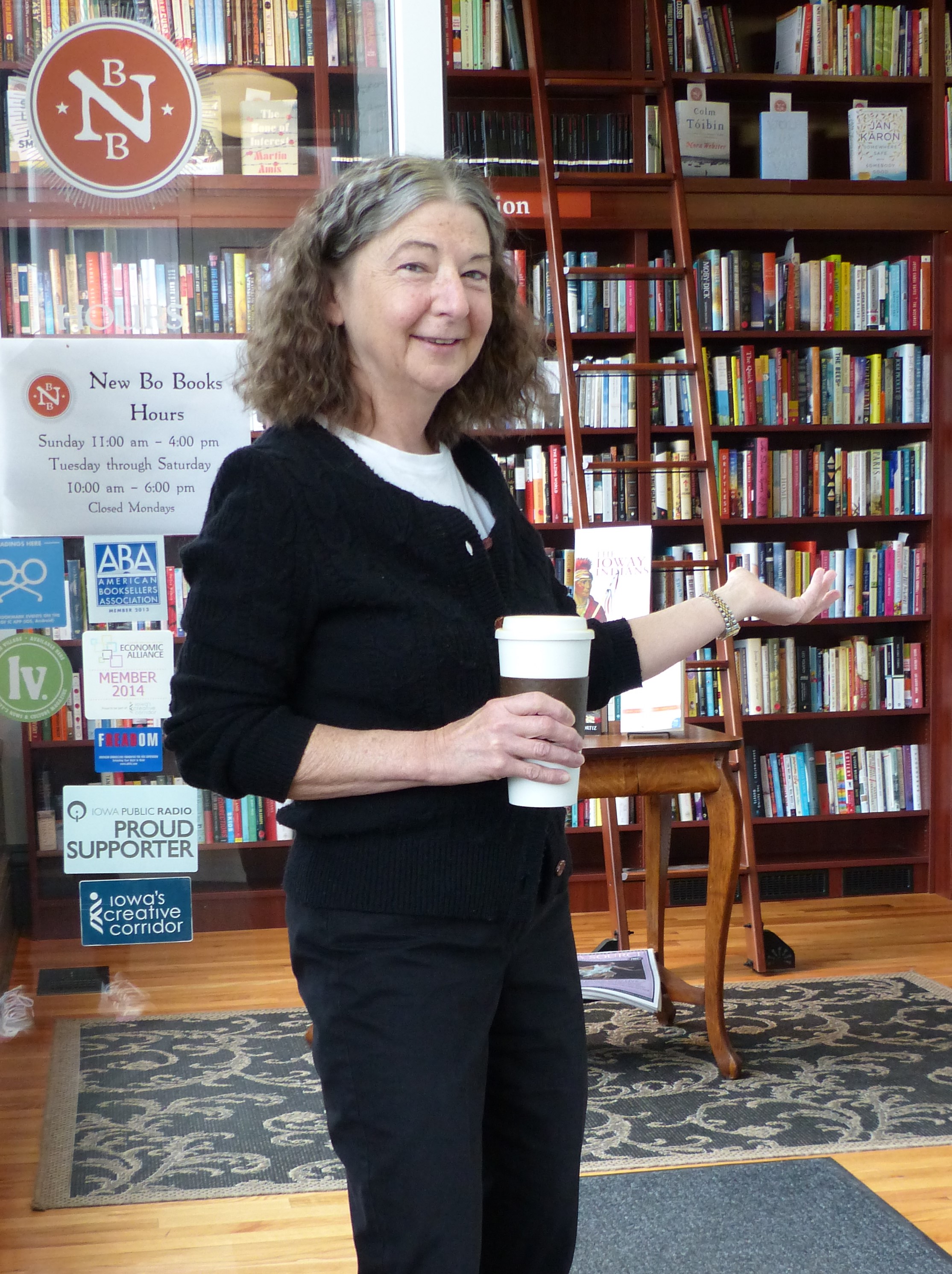
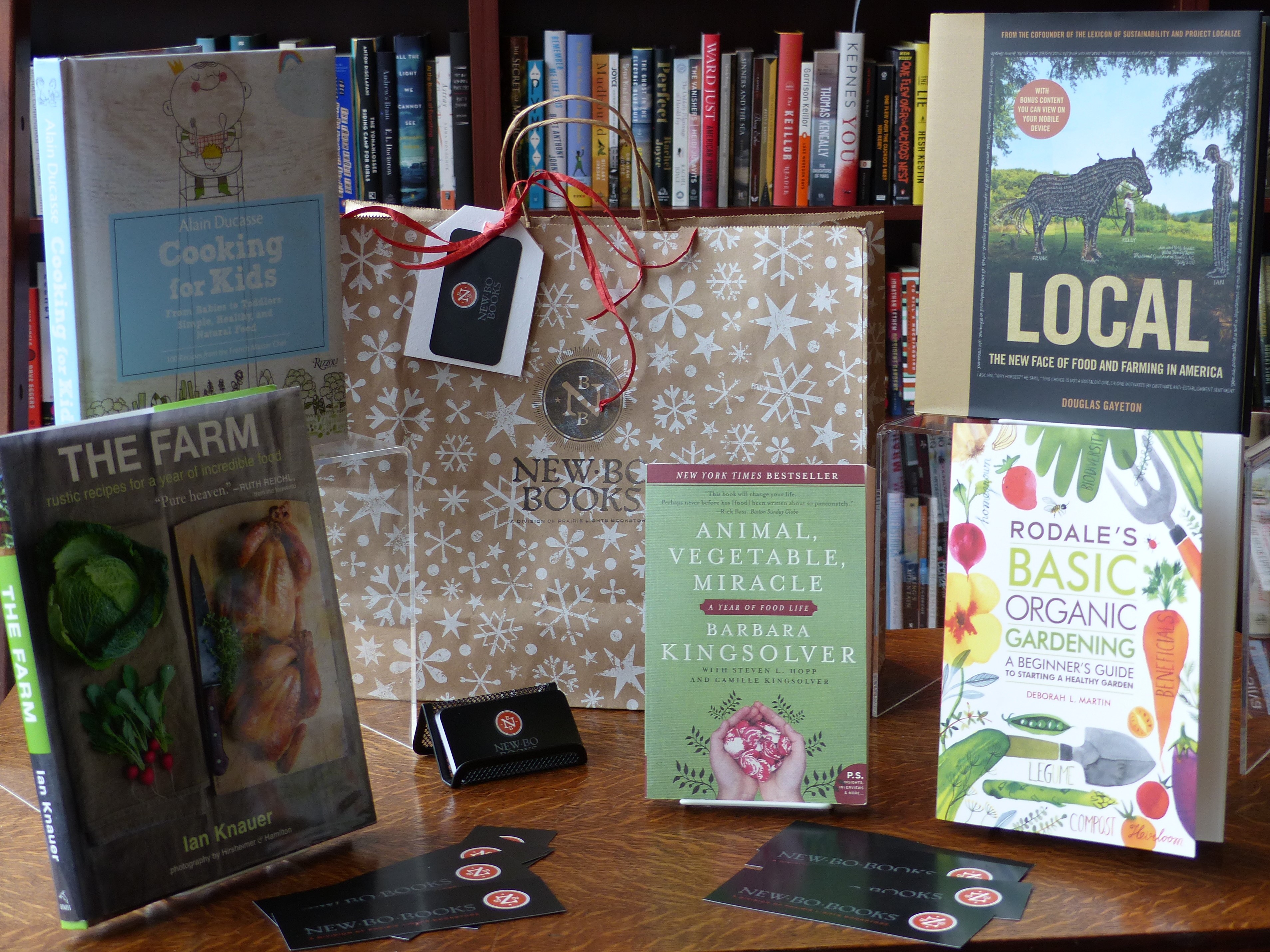
Step into the warmth of winter reading with a great selection at New Bo Books.
Books at New Bo Books
New Bo Books is a local bookstore affiliated with Prairie Lights Books in Iowa City. Check out their wide array of current adult topics and children’s classics for this Holiday Season.
For Children
A Leaf Can Be by Laura Purdie Salas. ISBN 9780761362036. A leaf is a leaf – or is it more? This poetic book helps little ones explore the role leaves play throughout the year.
If You Hold a Seed by Elly MacKay. ISBN 9789762447213. Inspire those you love; either a seed or a dream, planted and nurtured can grow. Beautiful illustrations!
Outside Your Window: A First Book of Nature by Nicola Davies. ISBN 9780763655495. An illustrated treasury of poems that reflect what children learn in their first encounters with nature.
Adult Nonfiction
Mountain Eyes by Scott Peters. Self-published. Wonderful photography and insightful reflections on man and nature from Scott Peters’ travels in Alaska, Patagonia and the Pacific Crest Trail. Number x120.
American Canopy by Eric Rutkow. ISBN 9781439193587. A broad historical study of the deep connection between America and its trees, from the colonial era to present day.
After a brisk walk on the trail stop in to pick up some great winter reading.
Books at Indian Creek Nature Center
Indian Creek Nature Center features a variety of books for children and adults. Certain general adult topic books are on sale for 20% off until gone. They also carry great nature/science kits for kids (Animal Tracks, Science on a Nature Walk, Going Green). New this year are all natural with bark still on building block sets and origami projects and books.
Just out: The Tallgrass Prairie Reader. Edited by John T. Price – University of Iowa Press ISBN-13 9781609382469. A wonderful collection of literature from and about the Tallgrass bioregion with voices and perspectives from the days of buffalo and immense prairies into the present. Individual writers honor the Tallgrass Prairie from their unique experiences and perspective.
Children’s Books
Hunting Red by Jean Snodgress Wiedenheft. ISBN 9780615907925. Inspired by the plants, animals and landforms of Indian Creek Nature Center, Hunting Red takes you on an adventure looking for the color red as it appears in nature.
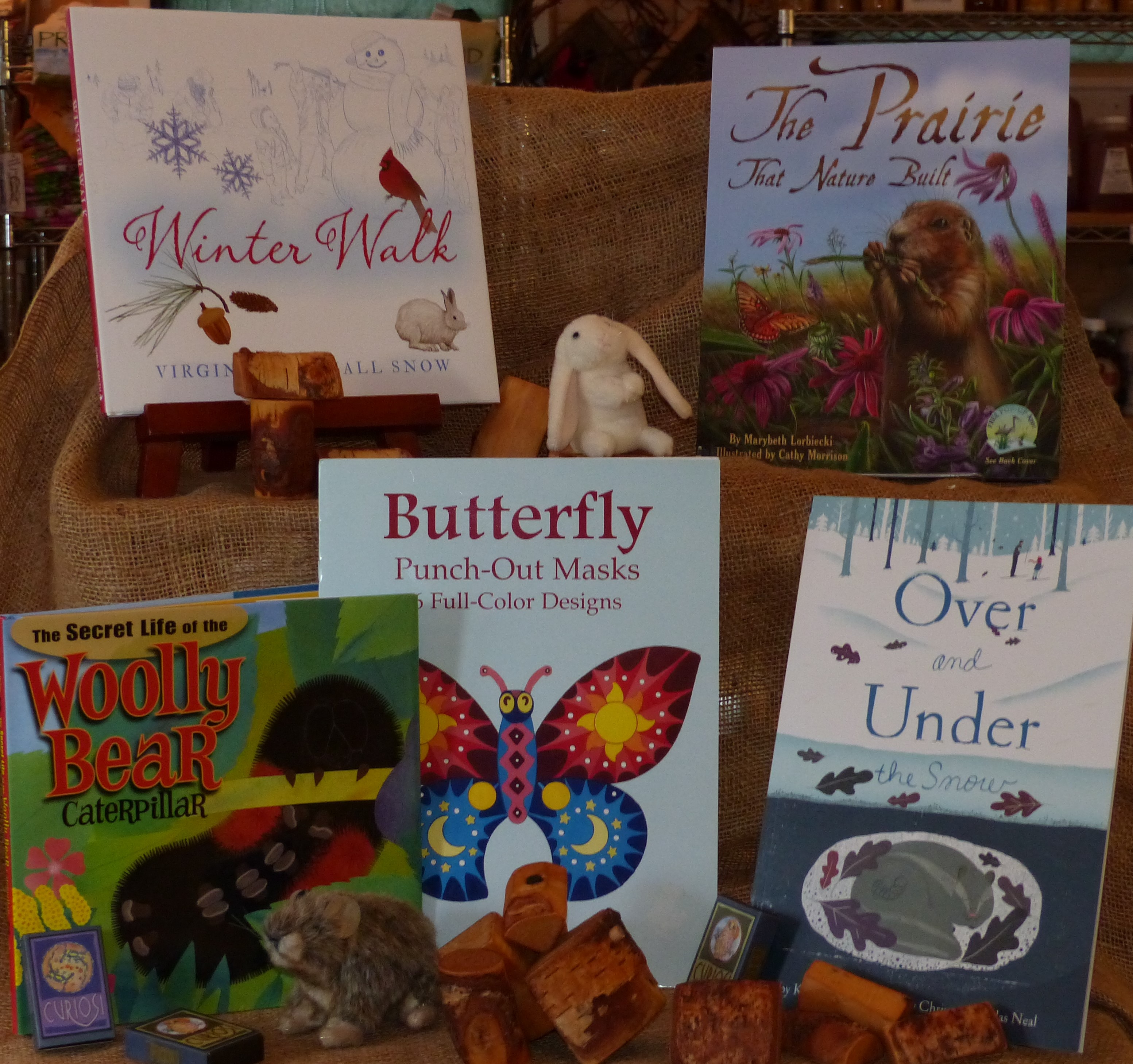
The Prairie that Nature Built by Marybeth Lorbiecki. ISBN 9781584694922. Romp through the prairie above, below and all around while also discovering unique creatures and fragile places. This beautiful richly illustrated book also comes with a scan code to get the free pop-up app. Watch the animals pop up from each page!
Adult Nonfiction
The Locavore Way by Amy Colter. ISBN9781603424530. Discover and enjoy the pleasures of Locally Grown Food. Learn how to source, experience and savor the freshest foods from your area. Features sustainability, and organic and humanely raised food.
Home Herbal Remedies by Melanie Wenzel. ISBN9780778804895. Recipes, treatments, sources and identification guide with photos. Exceptionally complete guide written by a homeopath expert.
New Bo Books (Continued)
For Children
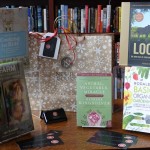
Great reading at New Bo Books!
On the Wing by Dave Elliott. ISBN 9780763653248. Take to the sky to explore all things avian – from the tiny, restless hummingbird to the Great Horned Owl. Verse and lovely illustrations.
The Great Kapok Tree: A Tale of the Amazon Rain Forest by Lynn Cherry. ISBN 9780152026141. A story to bring the larger story of endangered rain forests to life by taking the problem one creature at a time. Vibrantly colored watercolor drawings and a letter from the author to her readers to inspire care for the world.
These Bees Count by Alison Formento. ISBN 9780807578681. Can bees talk? Listen to their buzz as they count their way through fields and flowers.
This Tree Counts by Alison Formento. ISBN 9780807578902. Trees talk, if you listen very closely. Count your way through the worms, birds and others that need trees. In the end, trees most need friends like you!
Adult Nonfiction
Walden by Henry David Thoreau. ISBN 9781590306383. This lovely edition of the classic is complete with exquisite wood engravings that bring the text to life.
The Outermost House: A Year of Living on the Great Beach of Cape Cod by Henry Beston. ISBN 9780805073683. This modern twist on Thoreau’s Walden is a nature classic filled with the wonders of life itself. This book captures humanity’s relationship with nature.
A Sand County Almanac: And Sketches Here and There by Aldo Leopold. ISBN 9780195059281. Outdoor prose writing at its best by one of the foremost conservationists of our time. A book filled with beauty, vigor, and bite. Reveals Leopold’s deep love for a healthy land.
Adult Fiction
The River Why by David James Duncan. ISBN 9781578050840. Through the eyes of Gus, the young main character, we are led on a series of explorations into the wilds where the reader is treated to direct experience of the coastal rivers and forests. What begins as a physical journey becomes a spiritual one.
Poetry
Drift Ice by Jennifer Atkinson. ISBN 9780979745003. Atkinson evokes the natural world in loving detail. These poems move on inner currents and reveal astonishing worlds within our world.
Darkness Sticks to Everything: Collected and New Poems by Tom Hennen. ISBN 9781556594045. Hennen’s poetry is filled with attentive engagement with the natural world. He writes of seasonal weather, outdoor work, flora, fauna and a nuanced relationship to the upper Midwest.
Indian Creek Nature Center (Continued)
For Children
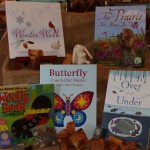
Nature comes alive in books
Winter Walk by Virginia Brimhall Snow. ISBN 9781423637479. All sorts of wonderful discoveries await while on a walk through the winter woods with Grammy. A warm, rhyming tale of animals, birds, trees and surroundings. Includes activities and winter trivia.
Wooly Bear Caterpillar by Laurence Pringle. ISBN 9781620910009. This bright, beautiful book reveals the secrets of the Wooly Bear Caterpillar. Why are they wooly? Find out! Excellent hardcover book for gift giving.
Adventure Board Book Series by Stan Tekiela. Preschool board books written by a naturalist and wildlife photographer. Charm is in the bright and clear pictures that bring the animals to life through fun facts.
Snouts & Sniffers ISBN 9781591934264.
Floppers & Loppers ISBN 9781591934240.
Peepers & Peekers ISBN 978159193423.
Paws & Claws ISBN 9781591934257.
Bird Color by Alison Hill Spencer. ISBN 9781591934288. Realistic and colorful this book introduces kids to birds they might see in their yard or the park as it teaches colors.
Smithsonian’s Nature Activities Bird Watcher by David Burnie. ISBN 075661029X. Hands on guide with easy activities, filled with facts and photos of birds. Also includes a fold out identification chart. Lots of fun!
Series by Claudia McGehee, University of Iowa Press. Each book presents learning opportunities illustrated by lovely scratchboard illustrations.
A Woodland Counting Book. ISBN 0877459894. Walk through the woods counting plants and animals from one to 50. Children will learn about the interactions of the woodland family and the seasons with notes for further discussion.
A Tallgrass Prairie Alphabet. ISBN 13 9780877458975. A prairie stroll follows the alphabet with flowers, animals and habitats. Beautifully and colorfully illustrated.
Where Do Birds Live? ISBN-13: 9781587299193. (not annotated)
Airplanes in the Garden – Monarch Butterflies Take Flight by Joan Z. Calder. ISBN 9780983296218. Monarchs are colorfully depicted throughout their life cycle as seen by a little girl who adopts two monarch caterpillars and shares their amazing transformation.
Animal ABC. Firefly books ISBN 13 9781770854567. (not annotated)
Series by Bobbie Kalman. Habitats, animals, weather, seasons, food sources and homes. Photos highlight each topic.
Backyard Habitats ISBN 10 0778729850.
A Grassland Habitat ISBN: 10: 0778729877.
Time for Kids – Butterflies! By the Editors of Time for Kids ISBN 13 9780060782139.
(not annotated)
Chickadee’s Message by Douglas Wood. ISBN 1591932289. Master storyteller shares an inspiring and timeless Native American folktale about goodness and beauty.
Who Was Here? Discovering Wild Animal Tracks by Mia Posada. ISBN 9781447718714.Wild animal tracks! First young readers find tracks and clues then turn the page to discover the animals they belong to!
Numbers in a Row. An Iowa Number Book by Patricia A. Pierce. ISBN 158536164X. All things Iowa counting from one to 100 reflects the wide variety of activities, history, locations, events and beauty all found in Iowa. Great way for kids to learn about the Hawkeye State!
Indian Creek Nature Center also carries great nature and science kits for kids (i.e. Animal Tracks, Science on a Nature Walk, Going Green) and new this year are all natural with bark on building block sets and origami projects and books.
Adult Nonfiction
Raw Energy by Stephanie Tourles. ISBN9781603424677. Nature’s Fast Food! Recipes to restore energy with simple, delicious, portable and raw snacks. Easy to make at home and take along such as bars, smoothies, juices and mixes. Pick it up to learn more!