by Winding Pathways | Jan 12, 2023 | Nature, Trees
Winter trees. We love ‘em even though they don’t sport their cooling green summer leaves or October’s color.
When autumn leaves fall, trees look wonderfully different. Their nakedness reveals sights that are difficult to notice during summer. Here are some of the delights we discover when walking through January woodlands and looking at the winter trees.
Pods, Seeds, Textures
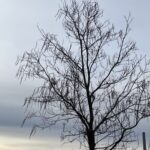
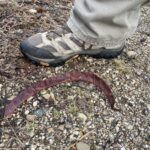
Pods and Seeds: Just what are those long string bean-looking pods hanging from the branches? They are the seed pods of the catalpa tree. Nearby are flattish, twisted, crinkled black pods upwards of six inches long. Some are still hanging from branches, while others litter the path. They’re honey locust pods. Pry one open to find large black seeds inside. Box elders have typical maple helicopter seeds that stay on the trees much of the winter unless devoured by hungry squirrels or cardinals. Sycamore trees hold their round ball seeds on the ends of branches well into winter.
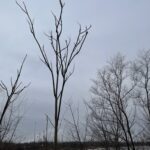
Twig Texture: Elms and sugar maples sport zillions of finely textured twigs toward their tops, while walnuts, box elders, catalpas, and ailanthus have far fewer but much thicker twigs. Ash trees are somewhat in between, but their twigs radiate out at nearly right angles from branches.
-
-
Catalpa pods hang on through the winter.
-
-
Pod next to size 12 foot.
-
-
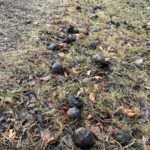
When you see walnuts look up and note the structure of the tree.
-
-
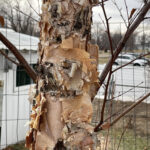
River Birch bark curls.
Bark and Shape
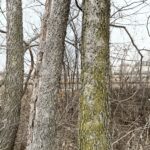
Bark: Young maples, ailanthus, and Siberian elms have smooth bark that becomes darker and more textured as the tree grows. The most intriguing bark pattern is always on hackberry trees. The bumpy bark makes it unmistakable.
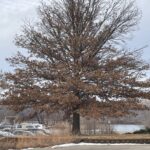
Shape: The profile of leafless trees often is a clue to the species. Pin oaks have a central trunk with lower branches that sometimes slope downward or radiate out at nearly right angles. The tree is spruce shaped in great contrast to wide-spreading white and bur oaks. Box elders always seem to be leaning one way or another, while American elms often show a thick buttress close to the ground beneath a vase-shaped upper. Siberian elms shoot straight for the sky.
-
-
Pin oaks hold leaves.
-
-
The knobby bark of the Hackberry reminds us of fat tires!
-
-
Ailanthus coarse twigs and finer twigging of Siberian Elm
Color
Color: Although winter tree bark is mostly gray to black sometimes color comes through. Spot a subtle orange bark and it’s likely a mulberry tree. Large Scotch pines also have pumpkin-colored bark towards the top. Sycamores are distinctive in their pale, flakey bark. And, white birches are easy to identify with their smoother, white bark that tends to curl as the trees age. Their cousin, the river birch, has shaggier bark and often grows larger in damp soil.
Winter trees are always fun to see and often are easy to identify. As we walk through the snow, we love discovering many tree shapes, textures, seeds, and bark. to help identify Google something like shape of (name of tree) in winter. The images will help you identify the trees before you go for a walk.
by Winding Pathways | Jan 5, 2023 | (Sub)Urban Homesteading, Garden/Yard, Nature, Trees/Shrubs, Weeds
A raging blizzard roaring over Winding Pathways just before Christmas showed us the power of HARVESTING SNOW. We love catching it.
Well, we didn’t really catch the snow, but our prairie did. It has a talent for harvesting snow and other forms of moisture. It taught us how prairie and other taller plants – grasses, forbs, shrubs, vines, and trees – help themselves grow next summer.
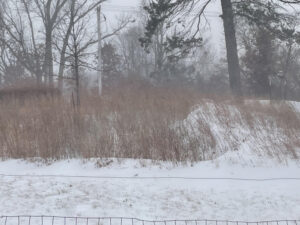
Our prairie has a thick growth of two-foot-tall dead stems from last summer’s growth. Each stalk is brittle, but thousands of them working together slowed the wind just enough for it to drop the snow it had swept off nearby lawns and roads.
The deep drift that settled on our prairie will melt and give next spring’s plants a jumpstart in moist soil. Nearby shortly sheared lawns can’t catch snow and will start the spring on dryer soil. Nature delivered irrigation water to our yard for free!
Nature’s Wisdom in Harvesting Snow
Growing up in the East, we are used to Nor ‘easters that pummel the landscape and create great skiing conditions. Until we moved west, we were not so familiar with how nature replenishes soil moisture, well, naturally!
In dry areas snow also helps next summer’s vegetables. During college, Rich worked weekends at an Idaho ranch. He was surprised one January when Lucille Pratt, part owner of the land and an outstanding vegetable gardener, asked him to shovel snow from a nearby drift onto the garden.
For a Jersey boy, this seemed like a weird request, but melting snow oozed water into the soil. That helped get the vegetables going and sustain them through the dry summer.
Snow may seem like a bother but it’s also a blessing to dry soil and the plants it sustains.
Over two blizzardy days, our prairie gently caught snowflake after snowflake. We already are looking forward to bright prairie flowers dancing in next summer’s breeze. Thanks, prairie for harvesting snow. Nature’s wisdom to catch winter’s snow and help next summer’s growth is amazing.
-
-
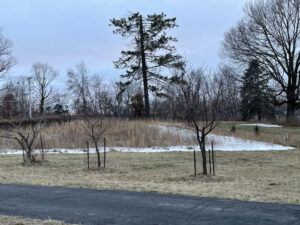
Capturing snow.
-
-
Three days later, a rapid melt left the ground bare, except where prairie plants held snow.
by Winding Pathways | Dec 15, 2022 | Birds, Garden/Yard, Nature

A chickadee gently cradled in man’s hand.
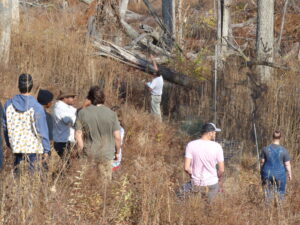
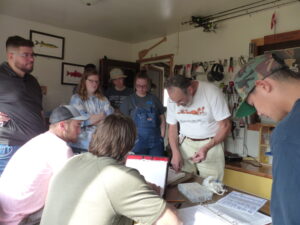
On an early, warm, bright November day, several Coe and Mt. Mercy University Students with their professors arrived at Winding Pathways to band birds. They stood mesmerized as one cradled a diminutive bird in his hand. This long-distance traveler had met a temporary misfortune.
It was a golden-crowned kinglet, a tiny bird tipping the scales at only .19 ounce. On a recent night, it had winged south from its summer home in the north and decided to rest and feed amid the tall grass and woods at Winding Pathways. Then, it would continue southward. It didn’t know that Dr. Neil Bernstein had other plans.
-
-
Dr. Bernstein sets a mist net by a fallen log.
-
-
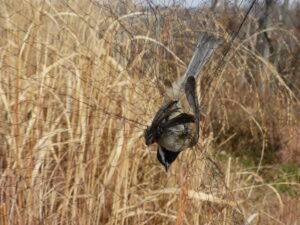
trapped chickadee
-
-
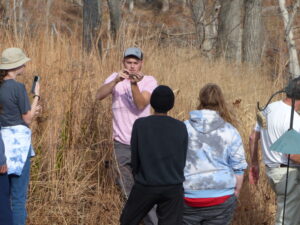
Untangling bird
Neil had stretched mist nets an hour earlier. The kinglet, along with chickadees and a Carolina wren didn’t see these fine mesh nets in time. They were caught but uninjured. Neil showed the students how to band birds by gently removing them from the net, weighing each tiny bird, recording data, placing a small lightweight band around its leg, and releasing it. Data are then submitted to help researchers better understand bird migration.
The kinglet and wren waited patiently as students weighed and banded each, but not the chickadees. These bitty, year-round residents have an attitude. They didn’t like being held one bit and pecked at the student’s fingers.
-
-
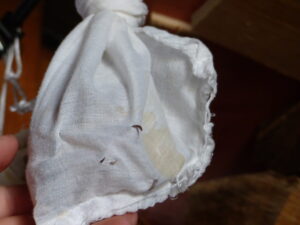
A bird’s claws poke through the bag.
-
-
Verifying information is important.
-

-
Tiny band ready to attach to a bird
-
-
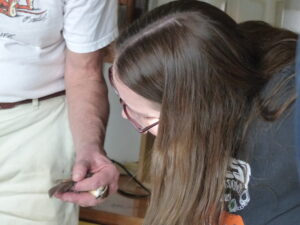
Checking feathers
Student Reactions
Students were used to collecting scientific data on different natural topics. They were fascinated by the process of banding birds. “I thought we were going to listen to a bird band!” joked one student. Another envisioned running around chasing birds, concluding that would not work well.
Students commented on how the pecks were sharp but not worrisome. One explained she talked quietly to the chickadee as she carefully held it. Reassuring the bird, she would not hurt it. “I could feel its heart rate slow down,” she commented.
Although chickadees are small, kinglets are even smaller. This kinglet will carry its band as it wings southward but chickadees are homebodies and will wear their bands as they flit around our yard all winter.
Why Band Birds?
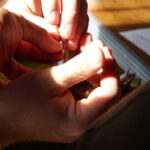
Tiny band with a number.
Banding is a traditional way of learning where birds go, habitat needs, and the impact of climate on both. Perhaps a fellow bander will catch “our” kinglet and inform scientists at the US Geological Survey.
by Winding Pathways | Dec 8, 2022 | Garden/Yard, Mammals, Nature, Travel/Columns
Fair Oaks Farm
A couple of times a year we drive to and from New Jersey to visit relatives. It’s a long thousand-mile slog each way, but we recently discovered an amazing driving break……watching a calf being birthed.
Our fastest route is following Interstate 80, but that involves running a traffic gauntlet in northeast Indiana and paying tolls and boredom along the Ohio and Indiana Turnpikes. On a recent trip, we took a more southern route, mostly following secondary roads to avoid tolls and traffic. Never would we have imagined that, on a driving break, we’d watch a birth!
Cow Adventure
Yup. A birth. We’d been following smallish roads across the Hoosier State and had vaguely heard of Fair Oaks Farm. As our car cleared a rise by an enormous farm field we spotted their colorful water tower and stopped in. It’s really not a farm…but then again it is. Mostly it’s a fascinating living museum of American agriculture, focused on dairy, pork, and crops combined with a hotel, restaurant, and gas station.
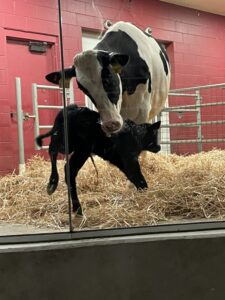
Wobbly legs
After checking in we entered the birthing barn to take in an amazing sight. Two Holstein dairy cows were giving birth, with a human attendant attentively watching to help as needed. As we sat with other families in the darkened seating area, two hooves emerged from each cow. One gave birth quickly. The other struggled until the attending woman helped by gently pulling the calf from her. We, and many others watching, were riveted by the real-time arrival of new living animals. This event brought to mind Marion’s experience growing up on a Maine dairy farm watching a calf being birthed.
From there we enjoyed exhibits telling the story of how crops are grown, dairy cows are cared for, and pork is produced. We walked from building to building enjoying interactive exhibits telling the story of food production. The Farm calls the exhibit areas Crop, Dairy, and Pig Adventures – and they truly are adventurous.
Ninja Warriors in Training
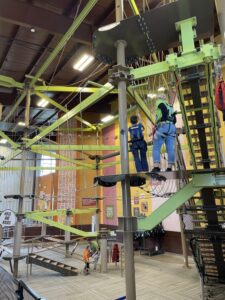
Kids on ropes course
At Pig Adventure we encountered a couple with two small children. “We were on a long drive from Indianapolis to Chicago. The kids were restless in the back seat. So, we stopped. Look at them now,” declared their mom. A young boy and girl were testing their balance on a large complex obstacle course sort of like we see on TV’s American Ninja Warrior. They were harnessed in and guided by employees. Thrills and exercise, yes. Danger, no.
As a seasoned museum professional Rich was impressed at how exhibits were accessible for walking-challenged folks with plenty of places to sit and rest. Yet they gave kids a chance to burn off energy as they moved from exhibit to exhibit. For example, kids could climb small “hills” and slide down the other side to see new displays. One boy operated a hand crank to move large constructed kernels of corn up a vertical elevator to drop into a “silo” and back down for kids to repeat the process. Great learning combined with physical activity. It was, for the family, an educational and exciting way to burn off energy.
Take Time to Experience
We are far from being kids but we gave the crank some turns, also. Then we took a tour break and enjoyed lunch at the site’s eatery, called the Farmhouse Restaurant. As we dined, we watched cheese being made behind a huge glass wall.
We could have boarded a shuttle bus to see actual dairy and pork operations nearby or walk to the orchard and pumpkin patch but time was pressing. We needed to hit the road. So, we will be back.
Visionary Beginnings
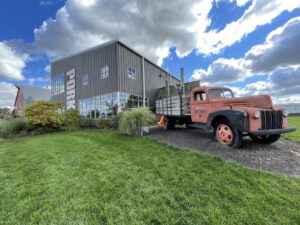
Pig Adventure Starts here!
Fair Oaks Farm was the dream of Mike and Sue McCloskey who began creating it in 1999. It opened a few years later and new exhibits – actually agricultural adventures – are regularly added. Today about 275 staff host thousands of people every year. Jobs for local teens, parents, and grandparents as they warmly welcome visitors.
It’s not all pigs and cows. Many people visit the orchard in the fall to pick apples or the pumpkin patch to stock up on the orange globes for Halloween. Later in the season, there’s ice skating, a forest of lights, and even igloos to enjoy.
The Farm is just off Interstate 94, which links Chicago and Indianapolis. Anyone driving East/West might consider taking smaller roads that parallel Interstate 80 for a less stressful drive that leads past the Farm. For information check out fofarm.com.
by Winding Pathways | Nov 24, 2022 | (Sub)Urban Homesteading, Birds, Bugs, Flowers/Grasses, Foraging, Garden/Yard, Nature
We think of fall as migration time when all the birds leave. And there is a great birdcast website to see in live time the flights. But an autumn walk through a park with wild edges reveals shrubs, bushes, and grasses alive with bird activity. Visit an orchard on a cold winter day and the odds are good for spotting robins pecking on frozen dropped apples, but wild fruits are more common, all just beyond suburbia.
Let’s step back to spring. When Rich worked at the Indian Creek Nature Center his phone would often ring during those first warm days. With excitement callers would announce that the robins had returned. Spring’s here!
Seeing a robin on a spring lawn gives the illusion that they’ve just made a long journey from a faraway wintering ground down south. Robins, bluebirds, and other birds usually just shift where they live and forage as seasons change.
Ecological Survivors
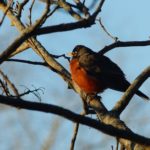
A robin surveys the area
Robins, in particular, are ecological survivors. They’re adapted to living on lawns and around people during the warm months, where they nest on porch eaves and forage for worms and bugs in mowed grass. The coming of fall’s cold marks the disappearance of robins from suburbia. They don’t go far and make an amazing dietary switcheroo to wild fruits.
Robins and bluebirds shun their summer buggy and wormy diet and shift to fruits and some seeds come winter.
On an October walk, we spotted several wild fruits – berries perhaps – that birds feast on during the cold months. the native plants are great – even the poison ivy – the exotics are problematic.
Here are some common winter weedy and seedy plants:
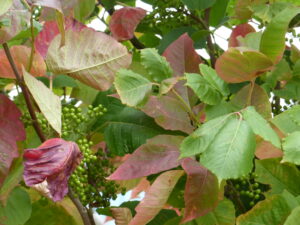
- Gray Dogwood. This small native dogwood often forms thickets along trails, parks, woods, and even yards and holds plenty of berries into cold months.
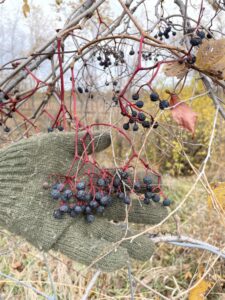
- Wild grapes. People rarely eat sour and seedy wild grapes, and sometimes birds also leave them alone during summer, but come winter the raison-like grapes make nutritious avian fare.
- Poke Weed. In late fall this tall purple-stemmed and fruited plant is hard to miss. Birds eat the frozen berries. Note: Poke berries are toxic to people and many mammals but not birds.
- Poison ivy. Gulp. This bane of allergic people is a beneficial wildlife plant. Deer and rabbits browse on the woody sprouts and birds feast on the berries.
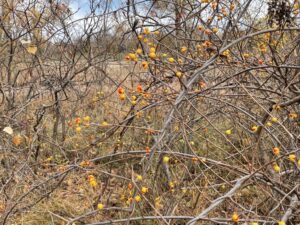
- Asian Honeysuckle, Japanese Barberry, and Oriental bittersweet are “dirty bird plants.” Actually, birds love the berries and carry them far and wide to poop out the seeds. All three exotic plants are highly invasive and crowd out more desirable native plants. Birds have helped them conquer woodlands and field edges to the detriment of healthy bio-diversity.
-
-
Poison Ivy berries are a favorite of birds.
-
-
Wild grapes are a tasty winter treat.
-
-
An invasive species and favorite of birds.
Winter Fare Is More Than Fruits
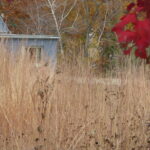
Winter bird fare isn’t just fruit. Many birds glean frozen spiders and insects from crevices in tree bark and dozens of species continue to eat grass and “weed” seeds. That’s a problem with mowed lawns. They produce no seeds, so few birds visit them during the colder months. Taller growing grasses, flowers, and shrubs often hold their seeds into the winter and are bird magnets.
-
-
Birds bob on prairie grasses.
-
-
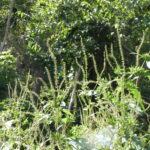
Ragweed seeds last through the winter.
Want to have birds in the yard all winter? Keeping feeders stocked helps, but better results come when homeowners encourage buffers of native shrubs, vines, and grasses that produce natural winter bird food and habitat. Most people love their tidy lawn, but edging the lawn, usually along a property line, or creating “pocket prairies” with native or desirable tall grasses, wildflowers, and shrubs adds summer color and year-round wildlife appeal. So, we encourage readers to create and leave wilder spaces for the birds!