by Winding Pathways | Mar 22, 2017 | Nature, Travel/Columns

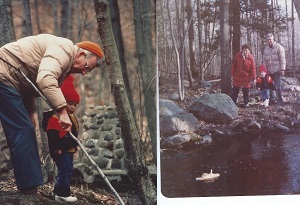
Floating boat with Gram and Gramps.
March is the perfect time for kids to slop around in puddles, intermittent streams, and small creeks. We get filthy, soaking wet, and learn! How ice forms. How it melts. Where critters live in the deep freeze. Balance teetering on rocks. Using sticks as levers to pry up dark, dank, slimy leaves. It’s a blast!
As kids we spotted the first emerging pussy willows along streams, caught the first calls of the red-winged blackbirds heralding their return, and imagined ourselves explorers in the wild – just beyond the manicured lawns. Sometimes I do wonder why we are still alive – reenacting “Washington Crossing the Delaware” on slippery ice floes and taking the “short cut” to school over the river on the large pipe above the dam from the chip board plant to the other side.
While Winding Pathways does not advocate dangerous activities like that, we do encourage familiarizes to get outside and experience the daily wonders unfolding as spring moves north.
Our kids floated toy boats with Gram and Gramps, fished the spring waters gaining experience to fish on their own in summer, and later took up more outdoor activities as the seasons progressed.
Here is a haiku that I’d written long ago that surfaced while I was culling old files.
“Dampness awakens.
Slow green shoots appear and grow.
Spring bursts in splendor.”
Winding Pathways folks hope you “Go outside and play!”
-

-
Yellow River State Forest
by Winding Pathways | Mar 21, 2017 | Birds, Nature, Wonderment
We’re lucky to have a pair of bald eagles nesting within walking distance of our home. Occasionally we clamber through the woods to check on the couple, but we’re careful to not disturb them. We stay a hundred yards away from their nest tree and spy on them through binoculars.
On March 12 Rich witnessed a remarkable trait of eagle parentage. Incubation is a female task with most birds. The male rarely sits. Not so with bald eagles. The soon-to-be father helps keep the eggs warm. Rich happened to be near the nest during the changing of the guard.
Watching from a distance.
He could see just the white crown of the sitting eagle’s head protruding from the huge nest built high in a white oak tree. Its mate perched on a limb about 50 yards away. Suddenly the sitting bird climbed off the eggs, spread its wings, and began circling the nest. Its mate joined the circling. After a few revolutions around the nest the recently sitting bird made a beeline north, presumably to look for dinner. The remaining eagle circled a few more times before settling down on a branch near the nest. After a minute or two it hopped into the nest and settled down over the eggs.
Who was who? Male and female bald eagles look alike, so Rich couldn’t tell if the male or female was the first incubator. It doesn’t really matter. Cooperation between the two is fascinating as this link shows.
Eagle parentage is an exercise in teamwork. The pair built the nest, take turns incubating, and both hunt for nestling food.
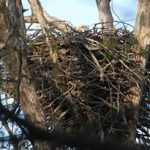
Eagles share parenting duties. Photo by M. Norlander
Eagle nests are becoming more common everywhere. The birds mostly feed on fish, so likely nest locations are near rivers, lakes, or the ocean. Nests are enormous piles of sticks, usually high in a tree and easy to spot. Bald eagles don’t seem bothered by roads, stores, or houses and often nests are within sight of heavy human activity.
Find a nest, dress warmly and sit some distance away with a pair of binoculars. You’ll be treated to examples of outstanding parentage. We plan to spy on our local eagle pair from a distance through the 35-day incubation period and as they raise their chicks.
by Winding Pathways | Mar 17, 2017 | Chickens
Baby Chicks Find a Home at Winding Pathways
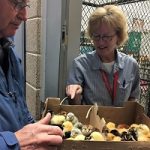
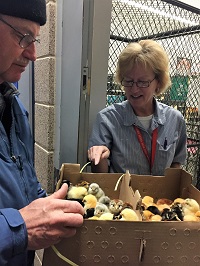
Enjoying the chicks
The call from our post office came at 6 a.m. “Could you please come soon and pick up a box of peeping baby chicks,” requested the pleasant postal worker. Soon we were in the car en-route to retrieve the babies. We were excited, but the story really began months earlier.
The Girls are Getting Old
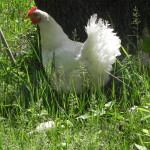
Going on their third lay cycle, the girls are getting old.
Our 13 hens were laying well but we knew they were on the downside of production. Young hens, called pullets, start laying when they are around 20 to 24 weeks old. During the approximately 14 months of their lay cycle we expect about 275 to 300 eggs per hen. Then they declare a vacation, take a break, shed their worn feathers, fatten up a bit, grow new feathers, increase their calcium, and after six or eight weeks begin their second lay cycle. They’ll produce fewer eggs this time and as they continue to age we can expect ever fewer eggs. So, about every third year we order baby chicks that grow into pullets to replace the old girls. The process takes time and requires planning.
Getting Ready for Baby Chicks
Around Christmas we began planning our new chick order. This year we cooperated with two friends. Each wanted some chicks but not a full order of 25. So, we placed a joint order with Hoover’s Hatchery in the tiny town of Rudd, Iowa. Leafing through their paper catalog and double checking their website helped us decide to order 50 chicks of diverse breeds. They’d collectively be a rainbow of feather colors and would lay light and dark brown, white, and blue/green eggs. We placed our order in January. Then, preparation really began.
Preparing for the Arrival
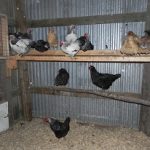
Keep adult chickens separate from chicks.
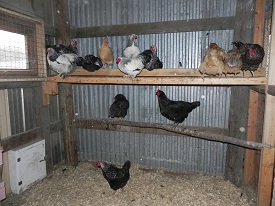
Our old chickens are in a coop Rich built in the corner of our small barn. We wanted to keep them until the new ones start laying in mid-summer. You don’t put baby chicks in with old ones. It just doesn’t work. Birds, like most creatures, are territorial and the old birds will kill the newcomers. The hens and chicks need to be kept apart. So, Rich made a second coop next to the existing one but separated by a wire and plywood wall. Inside the new coop, he made a large plywood box, complete with a plywood lid and two heat lamps to keep the babies warm until their feathers grew in and the weather warmed.
Hoover’s Hatchery sent a confirmation that the babies would arrive on March 15th. Gulp, the Ides of March. And, as it turned out, one of the colder days of winter.
Hoover’s also confirmed the breeds we ordered and the gender of each. We like having chicks arrive just as the winter is starting to wane and the weather is warming up. Normally our heat lamps keep the baby chicks warm in their brooder in the barn, but mother nature threw us a last-minute curve in 2017. A zero-degree low temperature was predicted. The lamps just couldn’t keep the birds warm enough in that chill, so just before arrival day Rich made two temporary brooders out of wooden boxes we had on hand. He set them up downstairs in the house in the same room as our wood stove. It’s the coziest room in the house. A couple of small lights in each wooden box was all that was needed to keep the chicks comfy in the heated room.
We hoped the arrangement would only last a few days until the weather warmed and the babies could move into the barn brooder. That many baby chicks start to smell after a few days. Everything was ready by the evening of March 13. The next two nights were frigid but the temporary brooders stayed warm.
Each of the small brooders had a quarter inch of wood chips on the floor and a simple plastic drinking water dispenser that we had bought at a local store. An egg carton served as a temporary feeder sturdy enough to last only a couple of days until we switched to metal feeders.
Why Baby Chicks Can Be Shipped in the Mail
Baby chicks have an amazing adaptation that allows hatcheries to ship them all over the world. While they develop as embryos inside the egg they draw nutrition from the yolk. After 21 days in Hoover’s Hatchery incubators the chicks emerge wet and gangly. But, much of the yolk remains inside them and provides plenty of nutrition for their first few days of life.
As soon as their wet fluff dries Hoover’s staff remove the tiny babies from the incubators, sorts them by gender and breed, and puts them in shipping boxes that soon go to the post office. Every week hundreds of boxes and thousands of chicks get sent every which way. They safely reach destinations as far away as Florida and Alaska. If it’s cold out, Hoover’s slips warming pads inside the box with the chicks. Because they are still living off their yolk the babies don’t need to eat or drink during their journey which is often by airplane.
Our chicks arrived at the Cedar Rapids Post office when just a day old and by the time we got them to the house they were but 26 hours old! All 52 chicks arrived safe and sound, and loudly peeping. We opened the box at the post office to make sure they were all alive and because the postal service workers really wanted to take a peek at them. Then we hustled home. Rich gently picked each baby up, dipped its bill into the waterer in the brooder so they knew where to drink, and released it. Soon the shipping box was empty and the two brooders full of peeping babies. They were thirsty, hungry, and sleepy and began pecking at their food, drinking water, and tumbling over to the floor for frequent naps.
Baby chicks are fun to watch. It’s a miracle of nature that an animal so young can feed itself and drink water without being tutored by a mother.
Baby Chick Nutrition
Adult chickens are omnivores that love seeds, worms, insects, fruit, and all sorts of other tidbits they find while scratching around outside. Baby chicks need a high protein diet and are too young to forage on their own, so we buy high protein feed called chick starter. It will be their main diet until they are old enough to forage in the run in a few months. Just before they start laying in about five months we’ll switch them to a layer feed that’s a little lower in protein but higher in calcium to meet the nutritional needs of a laying hen.
Making the Summer Switcheroo
As the chicks grow they’ll get too crowded in the brooder. By then spring will be in full glory and the weather warmer. Rich will take apart the brooder and let the adolescent birds roam around the full coop. They’ll grow fast and by early summer will need even more space. That will be time to say goodbye to the old hens and our one rooster. We put a notice on Craig’s list and have no problem selling the old birds for a buck apiece – a bargain for someone who wants older hens.
As soon as they are gone Rich will scoop the litter (a word that means the wood chips mixed with dry manure on the floor) and sprinkle it lightly on the garden. When used sparingly chicken manure is outstanding fertilizer that will stimulate the lettuce, chard, okra, tomatoes and squash that we harvest in summer. Then he’ll spray down the roosts, nests, feeders, walls and floor with a mild bleach/water solution and give it a day or two to dry. Next, are added a few inches of new clean wood chips to the floor and we welcome the youngsters to enjoy their new home.
This coop has a small door, called a pop hole, that leads outside to a huge fenced in run where the birds enjoy basking in the sun or sitting in the shade of a few small trees. They hunt for bugs and worms, exercise, and socialize outside or inside wherever they choose to be.
What Adult Chickens Need
Outfitting the coop for adult chickens is simple. Rich, being the consummate forager himself, made a feeder of scrap wood. Manufactured ones also work well. The birds always have a few buckets of drinking water and clean litter. A 2″X4″ with edges rounded off that spans the coop about four feet above the floor makes a comfortable roost, where the birds lounge during the day and sleep at night. It’s their bed. Can you imagine sleeping on your feet perched upright? Chickens do it every night. Many years ago, we salvaged a wooden nest that has eight nests, each about 12” by 12”. That’s where the chickens lay eggs. Our chickens always get fresh feed and water daily, and we harvest their eggs each afternoon.
Raccoons, opossums, skunks, mink, cats, and roving dogs all love to kill chickens, but mostly they prowl night. At dusk chickens always head inside and hop up to their roosts to sleep for the night. Rich or Marion closes and secure the latched pop hole door. Predators can’t reach the safely sleeping chickens. The chickens hop off the roost at dawn and greet the new day.
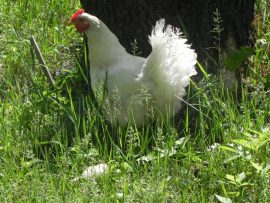
At Winding Pathways, we love our chickens. They eagerly gobble kitchen scraps that otherwise would end up in the compost bin or trash and return us the world’s best eggs. We learn plenty from watching our chickens. Children grow up understanding where food comes from and how to care for animals. Over the years, we’ve learned they are remarkably intelligent with a well-defined social structure. They also have an extensive vocabulary. The different sounds they make mean different things. When given plenty of space, great care, and good food, chickens are clean, pleasant, and fun to be around. We wouldn’t want to live without their company and delicious eggs.
by Winding Pathways | Mar 14, 2017 | Nature, Pests
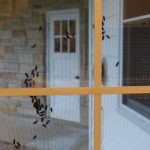
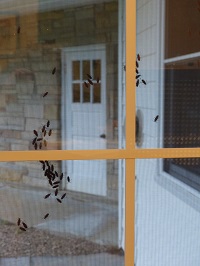
All this winter box elder bugs have gathered on warm sunny sides of homes.
Lots of box elder bugs are traipsing through homes this winter to the consternation of human occupants.
This amazingly common and crafty insect is a true bug named for common box elder trees. You don’t have to have box elder trees nearby to “enjoy” visits by the bug. Maple and ash trees of several species make a suitable hosts. Since these trees are everywhere in suburbia it’s no wonder box elder bugs pester so many people. Box elder bugs make their living feeding on tree seeds and sap but they don’t pose a threat to their host. Unlike the pests of many other trees box elder bugs don’t kill trees.
Come fall, box elder bugs prepare for cold weather by tucking themselves into bark crevices to patiently wait out the cold. However, they would rather be warm and if a house is nearby they seem to sense that soon the furnace will be going and indoors is the best place to overwinter,.
Although they are fairly large insects box elder bugs can crawl through tiny cracks and holes. Often they swarm in the sun on the exterior of a house and some manage to find their way inside. Winter is spent idly exploring light fixtures, furniture, and walls.
They are not really a serious pest. Pesky might be a better way to describe them. Box elder bugs neither bite nor sting. They do sometimes crawl on people and pets. Perhaps their most disagreeable characteristics are pooping and emitting a disagreeable odor if they are crushed. It’s this bad odor that protects them from predators. Hardly anything will eat a box elder bug.
Want to rid the house of box elder bugs? The best defense is a caulking gun. Late each summer seal up cracks that allow them to squeeze into the house. Any found wandering around inside can be vacuumed up, and a shop vac can suck up hundreds sunning on the exterior. Dump them in soapy water and they’ll quickly drown. A hose can also knock them off an exterior wall. Insecticides kill them but perhaps insecticides create more problems than they solve. Some people report that spraying box elder bugs with soapy water also kills them.
Box elder bugs aren’t harmful, but they are pesky and goofy. Caulking up home cracks can encourage them to winter outdoors in trees, rather than inside with you.
#
by Winding Pathways | Mar 9, 2017 | Labyrinths, Wonderment

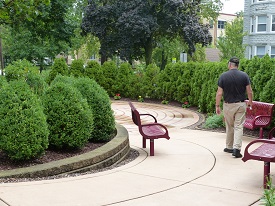
Set next to a busy sidewalk yet, discreet in location.
The world seems stressed now and yet, the tools we can use to help center and calm are sometimes gathering dust as we try to “figure things out.” In this time of Lenten Reflection and approaching Passover, Sheryl Crow’s song and lyrics resonate with me. “Out of Our heads”
And I remember the work of Ellen Bintz-Meuch in DuPage County Jails with women helping them find themselves and their way back to positive relations and productive lives.
Additionally, the Hampshire County Jail in Massachusetts sets an example of growth among inmates.
Let us reach out in compassion to help all be positive citizens. Indeed let us “get out of our heads and into our hearts.”